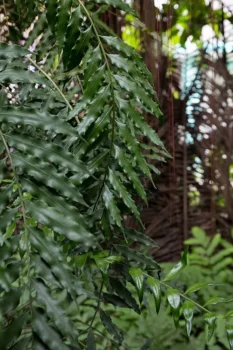
Hollyleaf Fringed Fern: A Rare Climbing Beauty for Warm Climate Gardens
Meet the hollyleaf fringed fern (Lomariopsis kunzeana), a fascinating climbing fern that’s as unique as its name suggests. This perennial beauty brings a touch of tropical elegance to gardens, but there’s more to this plant than meets the eye – including some important conservation considerations every gardener should know about.
What Makes This Fern Special?
The hollyleaf fringed fern isn’t your typical woodland fern. This climbing species creates an eye-catching display with its distinctive holly-like leaflets that give the plant its common name. As a member of the fern family, it reproduces through spores rather than flowers, making it quite different from most garden plants you might be familiar with.
Previously known by the synonym Stenochlaena kunzeana, this perennial fern has earned its place as a conversation starter in any garden lucky enough to host it.
Where Does It Call Home?
This native beauty has a limited natural range, calling both Florida and Puerto Rico home. Its presence in these warm, humid regions tells us a lot about what this fern needs to thrive.
- Species observed
- No observations
A Conservation Alert: Handle With Care
Here’s something important every gardener should know: the hollyleaf fringed fern has a Global Conservation Status of S2S4, indicating it faces some level of conservation concern. This means if you’re considering adding this fern to your garden, it’s crucial to source it responsibly from reputable nurseries that propagate their plants ethically, rather than collecting from wild populations.
Garden Role and Aesthetic Appeal
When grown responsibly, this climbing fern can serve as a stunning accent in the right garden setting. Its unique growth habit allows it to cascade gracefully or climb supports, creating vertical interest in shaded areas. The holly-like appearance of its fronds adds textural contrast that works beautifully in:
- Tropical and subtropical shade gardens
- Naturalistic woodland plantings
- Container gardens in warm climates
- Humid conservatories or screened porches
Growing Conditions: What This Fern Craves
The hollyleaf fringed fern is definitely a warm-weather lover, thriving in USDA hardiness zones 9b through 11. It has some specific preferences that reflect its native habitat:
- Light: Partial to full shade – direct sunlight can scorch its delicate fronds
- Moisture: Consistently moist, well-draining soil
- Humidity: High humidity levels (think tropical)
- Temperature: Warm temperatures year-round
Wetland Flexibility
Interestingly, this fern shows different moisture preferences depending on the region. In the Atlantic and Gulf Coastal Plain, it’s considered facultative, meaning it can handle both wetland and non-wetland conditions. However, in the Caribbean region, it’s classified as an obligate upland plant, preferring drier conditions. This flexibility makes it adaptable to various garden moisture levels within its preferred climate range.
Wildlife and Pollinator Considerations
Since ferns don’t produce flowers, the hollyleaf fringed fern won’t directly attract pollinators like bees and butterflies. However, it can still play a valuable role in creating habitat structure for small wildlife and contributing to the overall biodiversity of a native plant garden.
The Bottom Line: Should You Grow It?
The hollyleaf fringed fern is undeniably beautiful and can make a wonderful addition to warm-climate gardens – but only when sourced responsibly. Given its conservation status, this isn’t a plant to collect from the wild or purchase from questionable sources. If you’re in zones 9b-11 and have the right growing conditions (shade, warmth, humidity), consider reaching out to specialized native plant nurseries that can provide ethically propagated specimens.
Remember, growing rare native plants comes with the responsibility of being a good steward. When we choose to cultivate these special species, we’re not just adding beauty to our gardens – we’re potentially helping to preserve them for future generations.