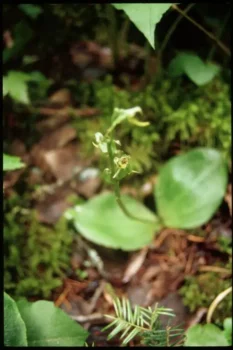
Hooker’s Orchid: A Rare Native Beauty for the Adventurous Gardener
If you’re looking to add something truly special to your woodland garden, Hooker’s orchid (Platanthera hookeri) might just be the conversation starter you’ve been searching for. This delicate native perennial brings an air of mystery and elegance to shaded garden spaces, though it’s definitely not a plant for beginners!
What Makes Hooker’s Orchid Special
Don’t let the name fool you – this charming little orchid has nothing scandalous about it. Named after botanist William Jackson Hooker, this native beauty produces small, greenish-white flowers arranged along a slender spike that can reach 8-15 inches tall. The flowers have an almost ethereal quality, especially when they catch dappled sunlight filtering through forest canopy.
As a member of the forb family, Hooker’s orchid is a perennial that lacks significant woody growth above ground, making it a perfect understory companion for woodland gardens.
Where You’ll Find This Native Gem
Hooker’s orchid is a true North American native, calling both Canada and the northern United States home. You can find it naturally growing across an impressive range, including Manitoba, New Brunswick, Nova Scotia, Ontario, Prince Edward Island, Quebec, and Newfoundland in Canada. In the U.S., it spans from Maine west to Minnesota and south through the Great Lakes region, including states like Connecticut, Illinois, Indiana, Iowa, Maine, Massachusetts, Michigan, Minnesota, New Hampshire, New Jersey, New York, Ohio, Pennsylvania, Rhode Island, Vermont, and Wisconsin.
- Species observed
- No observations
A Word of Caution: Rarity Matters
Important: Before you get too excited about adding this orchid to your garden, know that Hooker’s orchid is listed as endangered in New Jersey, with special protections in the Pinelands and Highlands regions. If you’re determined to grow this species, please only source plants from reputable nurseries that propagate them responsibly – never collect from the wild!
Growing Conditions: Not for the Faint of Heart
Here’s where things get interesting (and challenging). Hooker’s orchid isn’t your typical garden center find, and for good reason. This finicky beauty has very specific needs:
- Light: Prefers dappled to deep shade
- Moisture: Consistent moisture but not waterlogged conditions
- Soil: Rich, organic, well-draining woodland soil
- Climate: Thrives in USDA hardiness zones 3-7
- Special requirements: Needs mycorrhizal fungal partnerships to survive
The wetland status across different regions shows this plant is facultative, meaning it can handle both wetland and non-wetland conditions, giving you a bit of flexibility in placement.
The Reality Check: Why This Isn’t a Beginner Plant
Let’s be honest – growing Hooker’s orchid successfully is like trying to recreate a tiny piece of pristine forest floor in your backyard. These orchids depend on complex relationships with soil fungi (mycorrhizae) that are nearly impossible to replicate in typical garden settings. Most attempts at cultivation end in disappointment.
However, if you’re an experienced gardener with a established woodland garden and access to responsibly sourced plants, the challenge might be worth it for the bragging rights alone!
Wildlife and Pollinator Benefits
When Hooker’s orchid does bloom (typically in early to mid-summer), it provides nectar for moths and other nocturnal pollinators. The subtle fragrance and pale coloration make it perfectly adapted for evening pollination, adding another layer of intrigue to this mysterious woodland dweller.
Garden Design Role
In the rare instances where it thrives, Hooker’s orchid works beautifully as:
- A specimen plant in specialized woodland gardens
- Part of native plant collections
- An accent in naturalized shade areas
- A conversation piece for orchid enthusiasts
The Bottom Line
Hooker’s orchid is undeniably beautiful and ecologically valuable, but it’s honestly one of those look but don’t touch plants for most gardeners. If you’re passionate about native orchids and have the right growing conditions, by all means give it a try – but only with responsibly sourced material and realistic expectations.
For most gardeners seeking native woodland beauty, consider easier alternatives like wild ginger, trilliums, or native ferns that will give you that woodland magic without the heartbreak. Save Hooker’s orchid for when you’ve mastered the art of woodland gardening and are ready for your next big challenge!