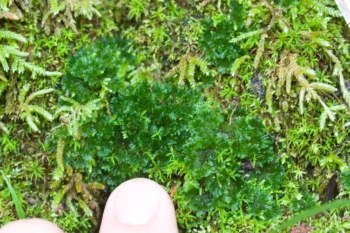
Discovering Hornwort: The Tiny Garden Helper You’ve Probably Never Noticed
Have you ever spotted tiny, green, almost alien-looking structures sprouting what appears to be miniature horns in your garden? You might have encountered Anthoceros fusiformis, commonly known as hornwort – one of nature’s most ancient and fascinating plants that’s been quietly doing its job for millions of years.
What Exactly Is Hornwort?
Hornwort belongs to a unique group of plants called bryophytes, which also includes mosses and liverworts. These aren’t your typical flowering plants – they’re much more primitive and have been around since before dinosaurs roamed the Earth! Anthoceros fusiformis is a terrestrial species, meaning it grows on land rather than in water (unlike some other plants also called hornworts).
This native North American species has quite a few scientific aliases, including Anthoceros stomatifer and Aspiromitus fusiformis, but don’t let the fancy names intimidate you. It’s simply a small, green, leaf-like plant that produces distinctive horn-shaped structures when it’s ready to reproduce.
Where You’ll Find This Little Wonder
As a native species to North America, hornwort naturally occurs across various regions of the continent, particularly in areas with consistent moisture and partial shade. You’re most likely to spot it in woodland settings, along stream banks, or in other naturally damp locations.
Why Should You Care About Hornwort?
While hornwort might not win any beauty contests in the traditional sense, it’s actually a valuable addition to your garden ecosystem. Here’s why this tiny plant deserves your respect:
- Soil health indicator: The presence of hornwort often signals good soil conditions and proper moisture levels
- Erosion control: Its low-growing habit helps stabilize soil in shaded, moist areas
- Biodiversity support: Provides microhabitat for tiny creatures and contributes to overall ecosystem health
- Natural ground cover: Creates a living carpet in areas where other plants might struggle
How to Identify Hornwort
Spotting Anthoceros fusiformis requires looking closely at the ground level. Here’s what to look for:
- Size: Very small, typically just a few centimeters across
- Appearance: Flat, green, ribbon-like or rosette-shaped thallus (the plant body)
- Distinctive feature: Long, thin, horn-like structures (sporophytes) that emerge from the plant body
- Habitat: Moist, shaded areas, often on bare soil or among other bryophytes
- Texture: Smooth, somewhat waxy appearance
A Word About Conservation
Anthoceros fusiformis has a conservation status of S2S4, which indicates it may be somewhat uncommon in parts of its range. This makes it all the more special when you discover it naturally occurring in your garden! If you’re lucky enough to have hornwort growing naturally, consider it a sign of a healthy, balanced ecosystem.
Living Harmoniously with Hornwort
The best approach with hornwort is simply to appreciate it and let it be. This ancient plant doesn’t need your help to thrive – in fact, it prefers to be left undisturbed. If you want to encourage bryophytes like hornwort in your garden, focus on:
- Maintaining consistently moist (but not waterlogged) areas
- Preserving shaded spots with good air circulation
- Avoiding heavy foot traffic in potential hornwort habitat
- Minimizing the use of fertilizers and chemicals that might disrupt the delicate balance
The Bottom Line
While you won’t be adding Anthoceros fusiformis to your shopping list for the garden center, learning to recognize and appreciate this humble hornwort can deepen your connection to the incredible diversity of plant life that surrounds us. It’s a reminder that not all garden inhabitants need to be showy to be valuable – sometimes the smallest, quietest residents are the ones doing the most important work behind the scenes.
Next time you’re wandering through a shaded, moist area of your garden, take a moment to look down and see if you can spot these tiny time travelers. You might just find yourself face-to-face with a living piece of ancient history!