Hornwort: The Tiny Garden Helper You’ve Probably Never Noticed
If you’ve ever wondered about those small, flat green patches that appear in the quieter corners of your garden, you might have encountered a hornwort! Specifically, you could be looking at Anthoceros punctatus, one of nature’s most understated yet fascinating little plants. Don’t worry if you’ve never heard of it – this tiny green wonder tends to fly under the radar, but it’s actually doing some pretty important work in your outdoor space.
What Exactly Is a Hornwort?
Let’s clear up any confusion right away: this hornwort isn’t the aquatic plant you might find in fish tanks. Anthoceros punctatus is a terrestrial bryophyte, which puts it in the same plant family as mosses and liverworts. Think of it as moss’s quirky cousin that decided to take a slightly different evolutionary path.
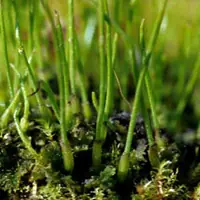
This little plant creates flat, green, leaf-like structures called thalli that hug the ground. What makes hornworts truly distinctive are their sporophytes – those are the reproductive structures that look like tiny green horns sticking up from the plant body. Hence the name hornwort!
Where You’ll Find This Native Beauty
Hornworts are native to North America and can be found across the continent in suitable habitats. They’re particularly fond of moist, disturbed soils and often pop up in areas where the ground has been recently turned over or in spots with rich organic matter.
A Word About Rarity
Here’s something important to know: Anthoceros punctatus has a conservation status of S2S3, which means it’s considered uncommon to moderately common in its range. While it’s not critically endangered, this little plant deserves our respect and protection. If you’re lucky enough to spot it in your garden, consider it a sign of a healthy ecosystem!
Spotting Hornwort in Your Garden
Identifying hornworts can be a bit tricky since they’re quite small and understated. Here’s what to look for:
- Flat, green, ribbon-like or lobed thalli (the main plant body) that lie close to the soil
- Distinctive horn-shaped sporophytes that emerge from the thallus
- A preference for moist, shaded areas with organic-rich soil
- Often found on bare or recently disturbed soil
- May appear alongside mosses and liverworts
Is Hornwort Beneficial for Your Garden?
Absolutely! While hornworts might not win any beauty contests, they’re actually fantastic garden citizens. Here’s why you should appreciate these tiny green helpers:
- Soil stabilization: Their flat growth helps prevent soil erosion
- Ecosystem indicators: Their presence suggests healthy, undisturbed soil conditions
- Biodiversity boost: They contribute to the complex web of small organisms in your garden
- Natural ground cover: They provide living mulch in appropriate areas
Living in Harmony with Hornworts
Since Anthoceros punctatus has some conservation concerns, the best approach is to appreciate it where it naturally occurs rather than trying to cultivate it. Here are some ways to be hornwort-friendly:
- Avoid disturbing areas where you spot hornworts
- Maintain moisture in shaded garden areas where they might naturally establish
- Reduce the use of chemical fertilizers and pesticides in areas where bryophytes grow
- Leave some wild spaces in your garden where these plants can thrive undisturbed
The Bottom Line
While you can’t exactly plant hornworts in the traditional sense, you can create conditions where they might naturally establish and thrive. Think of them as special guests in your garden – if they choose to visit, consider yourself lucky! Their presence indicates that you’re maintaining a healthy, balanced ecosystem that supports even the smallest and most specialized plants.
So next time you’re wandering through your garden, take a moment to look down at the ground. You might just spot one of these remarkable little plants quietly doing its part to keep your garden ecosystem healthy and diverse.