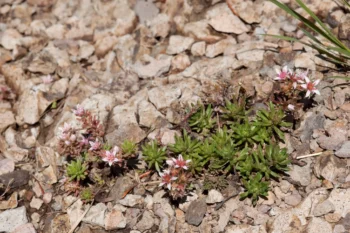
Huachuca Mountain Stonecrop: A Hidden Gem for Southwestern Gardens
If you’re looking for a unique native succulent that’s perfectly adapted to the challenging conditions of the American Southwest, meet the Huachuca Mountain stonecrop (Sedum stelliforme). This charming little plant might not be a household name, but it’s definitely worth getting to know – especially if you’re passionate about native gardening or creating water-wise landscapes.
What Makes This Plant Special?
The Huachuca Mountain stonecrop is a true native of the southwestern United States, naturally occurring in the mountainous regions of Arizona and New Mexico. As a perennial forb, this succulent forms attractive rosettes of thick, fleshy leaves that store water for those long, dry spells that define desert living. When it blooms, it produces delicate, star-shaped yellow flowers that add a bright pop of color to any garden.
What sets this stonecrop apart from its more common cousins is its adaptation to higher elevation desert conditions. It’s perfectly evolved for the unique climate found in places like the Huachuca Mountains, where it gets its common name.
- Species observed
- No observations
A Word About Rarity
Here’s something important to know: Sedum stelliforme has a conservation status of S3S4, which means it ranges from uncommon to apparently secure in its natural habitat. While this doesn’t make it critically endangered, it does mean we should be thoughtful about how we source and grow this plant. If you decide to add it to your garden, make sure you’re getting your plants or seeds from reputable native plant nurseries that practice responsible propagation.
Why Grow Huachuca Mountain Stonecrop?
This little succulent brings several benefits to the right garden:
- Water-wise gardening: Once established, it’s extremely drought tolerant
- Native pollinator support: The small yellow flowers attract native bees and other beneficial insects
- Low maintenance: Perfect for gardeners who want beauty without the fuss
- Unique appearance: Adds textural interest with its rosette form and succulent leaves
- Conservation value: Supporting native species in cultivation helps preserve genetic diversity
Where Does It Fit in Your Garden?
The Huachuca Mountain stonecrop shines in specific garden settings:
- Rock gardens: Its compact size and drought tolerance make it perfect for tucking between stones
- Xeriscapes: An ideal choice for water-conservation landscaping
- Native plant gardens: Pairs beautifully with other southwestern natives
- Container gardens: Excellent for pots and succulent arrangements
- Ground cover: Can spread to form attractive mats in appropriate conditions
Growing Conditions and Care
Success with Huachuca Mountain stonecrop comes down to mimicking its native mountain desert environment:
Location and Light
Plant in full sun to partial shade. In extremely hot climates, some afternoon shade can be beneficial.
Soil Requirements
The golden rule: drainage, drainage, drainage! This plant absolutely must have well-draining soil. Heavy clay or consistently moist conditions will quickly lead to root rot. Sandy or gravelly soils work best.
Watering
Less is definitely more. Water deeply but infrequently, allowing the soil to dry completely between waterings. Once established (usually after the first year), natural rainfall may be sufficient in many areas.
Climate Considerations
Hardy in USDA zones 7-10, this plant handles both heat and moderate cold well. It’s adapted to the temperature swings common in mountain desert regions.
Planting and Propagation Tips
When planting Huachuca Mountain stonecrop:
- Choose a location with excellent drainage – consider raised beds or slopes
- Plant in spring or fall when temperatures are moderate
- Space plants appropriately to allow for air circulation
- Mulch lightly with gravel or small stones rather than organic mulch
- Avoid overwatering during establishment – it’s better to err on the dry side
The Bottom Line
Huachuca Mountain stonecrop is a wonderful choice for gardeners in appropriate climates who want to support native plants while creating beautiful, low-maintenance landscapes. Its rarity makes it even more special – by growing this plant responsibly, you’re participating in conservation while enjoying a truly unique addition to your garden.
Just remember: source responsibly, provide excellent drainage, and resist the urge to overwater. Do that, and this charming native succulent will reward you with years of beauty and the satisfaction of growing something truly special.