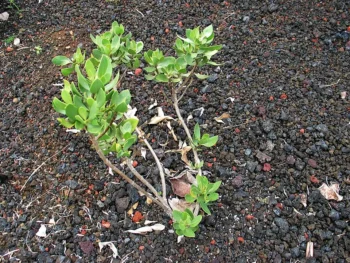
Huahekili Uka: Hawaii’s Rare Native Treasure Worth Protecting
Meet huahekili uka (Scaevola kilaueae), one of Hawaii’s most precious and endangered native shrubs. This remarkable plant isn’t just another pretty face in the garden – it’s a critically imperiled species that represents the unique botanical heritage of the Hawaiian Islands. If you’re passionate about native gardening and conservation, this rare beauty might just capture your heart.
What Makes Huahekili Uka Special
Huahekili uka belongs to the Scaevola family and grows as a multi-stemmed woody perennial shrub. Typically reaching 4-5 meters (13-16 feet) in height, this native Hawaiian plant develops several stems that emerge from or near the ground, creating an attractive, bushy appearance that’s perfectly suited to Hawaii’s volcanic landscapes.
The plant produces the characteristic fan-shaped flowers typical of the Scaevola genus, usually in shades of white to pale blue. These blooms aren’t just beautiful – they’re an important part of Hawaii’s native ecosystem, likely supporting indigenous pollinators that have co-evolved with this species over thousands of years.
A Plant on the Edge: Conservation Status
Here’s the important part: Huahekili uka has a Global Conservation Status of S1, meaning it’s critically imperiled. This classification indicates that there are typically only 5 or fewer occurrences of this plant in the wild, with very few remaining individuals (fewer than 1,000 plants total). This makes it one of Hawaii’s rarest native species.
If you’re considering adding this plant to your garden, it’s crucial that you only obtain it through responsible sources that are working to conserve the species, not exploit it.
Where Huahekili Uka Calls Home
This endemic Hawaiian species is found exclusively in Hawaii, where it has adapted to the unique volcanic conditions of the islands. As a true native, it has spent millennia developing alongside Hawaii’s other indigenous plants and animals, making it an irreplaceable part of the local ecosystem.
- Species observed
- No observations
Growing Huahekili Uka: For the Dedicated Conservation Gardener
Given its critically endangered status, huahekili uka isn’t a plant for casual gardening. However, if you have access to ethically sourced material and want to contribute to conservation efforts, here’s what you need to know:
Ideal Growing Conditions
- Climate: USDA hardiness zones 10-11 (tropical Hawaiian conditions)
- Soil: Well-draining volcanic soils typical of Hawaiian landscapes
- Sunlight: Conditions similar to its native volcanic habitat
- Water: Moderate watering that mimics natural Hawaiian rainfall patterns
Garden Role and Design
Huahekili uka works best in:
- Native Hawaiian restoration gardens
- Conservation collections
- Specialized botanical gardens focused on rare species
- Educational landscapes highlighting Hawaii’s endangered flora
This isn’t a plant for mixed borders or casual landscaping – it’s a specimen plant that deserves special attention and care, both for its rarity and its ecological significance.
Supporting Conservation Through Gardening
If you’re passionate about growing huahekili uka, consider partnering with Hawaiian botanical gardens, conservation organizations, or native plant societies. These groups often have seed collection and propagation programs that work to increase populations of rare native species while maintaining genetic diversity.
Remember, every plant grown from responsibly sourced material could potentially contribute to future conservation efforts, whether through seed production, research, or eventual reintroduction programs.
The Bottom Line
Huahekili uka represents both the beauty and fragility of Hawaii’s native ecosystems. While its critically endangered status means it’s not suitable for most home gardens, it serves as an important reminder of what we stand to lose – and what dedicated gardeners and conservationists can help preserve.
If you’re drawn to rare native Hawaiian plants, consider this species a symbol of the importance of conservation gardening. Whether you’re able to grow it yourself or simply support others who do, huahekili uka deserves our protection and respect.