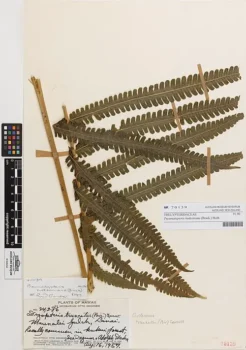
Hudson’s Air Fern: A Rare Hawaiian Native Worth Protecting
Meet Hudson’s air fern (Pneumatopteris hudsoniana), a fascinating native Hawaiian fern that’s as elusive as it is intriguing. Also known by its Hawaiian name laukahi, this perennial fern represents one of Hawaii’s unique botanical treasures that deserves our attention and respect.
A True Hawaiian Native
Hudson’s air fern is exclusively native to Hawaii, making it a genuine piece of the islands’ natural heritage. Unlike many plants you might encounter in Hawaiian gardens, this fern has called the islands home long before human arrival, evolving alongside Hawaii’s other endemic species to create the unique ecosystems we see today.
- Species observed
- No observations
Understanding This Unique Fern
Despite its common name suggesting it’s an air fern, Pneumatopteris hudsoniana is actually a terrestrial fern classified as a forb – essentially a non-woody vascular plant. You might also encounter it listed under its botanical synonym, Thelypteris hudsoniana, in older references.
What makes this fern particularly special is its rarity. With a Global Conservation Status of S3 (Vulnerable), Hudson’s air fern is considered at risk throughout its range. This classification means it’s either very rare and local, found only in restricted areas, or facing other factors that make it vulnerable to disappearing entirely.
Where You’ll Find It Growing
In its natural habitat, Hudson’s air fern typically grows in upland areas rather than wetlands. Its wetland status is classified as Facultative Upland, meaning it usually prefers drier conditions but can occasionally tolerate wetter sites.
Should You Grow Hudson’s Air Fern?
Here’s where things get a bit complex. While this native Hawaiian fern would theoretically make a wonderful addition to a native plant garden, its vulnerable conservation status means we need to approach it thoughtfully.
The Conservation Consideration
With only an estimated 21 to 100 occurrences or between 3,000 and 10,000 individual plants remaining, every Hudson’s air fern matters for the species’ survival. If you’re interested in growing this rare beauty, it’s crucial to:
- Only obtain plants from reputable sources that propagate responsibly
- Never collect from wild populations
- Consider supporting conservation efforts for Hawaiian native plants
- Choose other native Hawaiian ferns that are more common if you simply want native species
Growing Conditions and Care
Unfortunately, detailed growing information for Hudson’s air fern is quite limited, which isn’t surprising given its rarity. What we do know is that it naturally occurs in upland areas of Hawaii, suggesting it prefers:
- Well-draining soil conditions
- Partial shade to filtered light
- Hawaiian climate conditions (challenging for mainland gardeners)
Alternative Native Options
If you’re passionate about growing native Hawaiian plants but want to avoid potentially impacting rare species, consider other native Hawaiian ferns that are more readily available and less conservation-sensitive. Your local native plant society or botanical garden can suggest appropriate alternatives that will give you that authentic Hawaiian native garden feel without the conservation concerns.
Supporting Conservation
Sometimes the best way to appreciate a rare plant is to support its conservation rather than grow it yourself. Consider donating to Hawaiian native plant conservation programs or participating in habitat restoration projects that help protect the wild spaces where Hudson’s air fern naturally occurs.
Hudson’s air fern reminds us that not every beautiful native plant needs to be in our gardens to be valued. Sometimes, the most loving thing we can do for a rare species is to appreciate it from afar while working to ensure it has a secure future in its natural home.