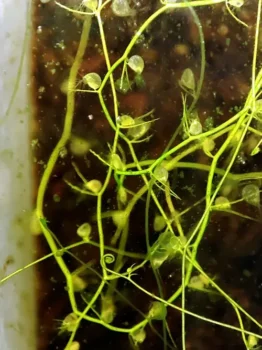
Humped Bladderwort: The Tiny Carnivorous Plant That’s Perfect for Water Gardens
Meet the humped bladderwort (Utricularia gibba), one of nature’s most fascinating miniature carnivores! This unassuming little native plant might not win any beauty contests, but it packs a punch when it comes to unique garden interest. If you’re looking to add something truly special to your water feature or bog garden, this tiny predator might just be your new favorite conversation starter.
What Exactly Is Humped Bladderwort?
Humped bladderwort is a native North American carnivorous plant that belongs to the bladderwort family. Don’t let its small size fool you – this little guy is a sophisticated hunter! It’s what botanists call a forb, meaning it’s a soft-stemmed plant without woody tissue. The plant can behave as either an annual or perennial depending on your climate and growing conditions.
You might also encounter this plant listed under several historical names, including Utricularia biflora, Utricularia fibrosa, Utricularia obtusa, or Utricularia pumila in older gardening references.
Where Does It Call Home?
This adaptable native has one of the most impressive natural ranges you’ll find! Humped bladderwort grows naturally across an enormous territory, from Canadian provinces like British Columbia, New Brunswick, Nova Scotia, Ontario, and Quebec, all the way down through most of the United States. You’ll find it thriving in states from Alabama to Wisconsin, and from California to Maine. It’s even native to Hawaii, Puerto Rico, and Pacific territories like Guam and Palau.
- Species observed
- No observations
A Special Note About Rarity
While humped bladderwort has a wide natural range, it faces some conservation challenges in certain areas. In New Jersey, it’s listed with special status – some populations are considered endangered while others are listed for protection in the Pinelands and Highlands regions. If you’re interested in growing this plant, make sure you source it responsibly from reputable native plant nurseries rather than wild-collecting.
The Wetland Specialist
Here’s something really important to know: humped bladderwort is what we call an obligate wetland plant. This means it almost always occurs in wetland conditions across all regions where it grows. Whether you’re in the arid West, the Great Plains, or anywhere in between, this plant needs consistent moisture to thrive.
Why Grow Humped Bladderwort?
You might be wondering why anyone would want such a tiny, inconspicuous plant. Here are some compelling reasons:
- Unique carnivorous nature: It’s one of the few carnivorous plants you can grow in standard water gardens
- Native plant benefits: Supports local ecosystem health and requires no fertilizers
- Educational value: Perfect for teaching kids (and adults!) about carnivorous plants
- Low maintenance: Once established in proper conditions, it largely takes care of itself
- Conversation starter: Your guests will be fascinated by your tiny aquatic hunter
Perfect Garden Settings
Humped bladderwort isn’t your typical border plant – it needs very specific conditions to thrive:
- Water gardens: Shallow areas of ponds or water features
- Bog gardens: Constantly moist, acidic soil conditions
- Container water gardens: Large pots or tubs with 1-6 inches of water
- Pond edges: Shallow, muddy margins of natural or artificial ponds
Growing Conditions and Care
Success with humped bladderwort comes down to getting the water conditions right:
- Water depth: 1-6 inches of shallow, still or slow-moving water
- Light: Full sun to partial shade (morning sun is ideal)
- Water quality: Soft, slightly acidic water works best
- Temperature: Hardy in USDA zones 3-11, though it may behave as an annual in colder regions
- Soil: Muddy, organic-rich substrates when grown in containers
Planting and Maintenance Tips
The good news? Once you get the conditions right, humped bladderwort is remarkably low-maintenance:
- Start with responsibly sourced plants from native plant nurseries
- Place in shallow water with gentle or no current
- Avoid fertilizers – as a carnivorous plant, it gets nutrients from tiny prey
- Allow some plant debris to accumulate for the microscopic creatures it feeds on
- In colder zones, collect some plant material before winter for indoor overwintering
- Be patient – the tiny yellow flowers and intricate trap structures require close observation to appreciate
What to Expect
Don’t expect showy blooms or dramatic foliage with humped bladderwort. This plant’s charm lies in its fascinating biology rather than its visual impact. The tiny yellow flowers are easily missed, and the submerged stems with their microscopic bladder traps require a magnifying glass to truly appreciate. Think of it as the garden equivalent of a living science experiment!
Is Humped Bladderwort Right for Your Garden?
This plant is perfect for gardeners who love unique natives, have appropriate water features, and enjoy plants with fascinating biology. It’s not the right choice if you’re looking for showy flowers or don’t have consistent water conditions. But if you want to add a truly special native carnivorous plant to your water garden while supporting local ecosystems, humped bladderwort might just be your perfect match!
Remember to source your plants responsibly, especially given the conservation concerns in some areas. Your local native plant society or specialized aquatic plant nurseries can help you find ethically sourced specimens to start your own population of these remarkable tiny hunters.