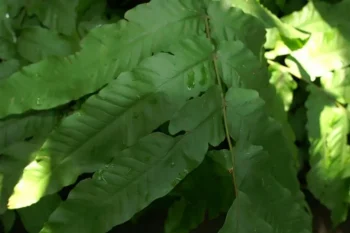
Incised Halberd Fern: A Tropical Touch for Your Shade Garden
Looking to add some tropical flair to your shady garden spots? The incised halberd fern (Tectaria incisa) might just be the distinctive foliage plant you’re searching for. With its uniquely shaped fronds and glossy green appearance, this perennial fern brings an exotic touch that’s hard to ignore.
What Makes the Incised Halberd Fern Special?
The incised halberd fern gets its common name from its distinctive frond shape – the leaves are deeply lobed and triangular, resembling the blade of a medieval halberd weapon. These glossy, bright green fronds create an eye-catching display that stands out among more typical fern varieties. As a member of the fern family, it reproduces through spores rather than flowers, making it quite different from your average garden plant.
You might also see this fern listed under its scientific synonym, Tectaria martinicensis, but Tectaria incisa is the currently accepted name. This perennial plant maintains its foliage year-round in suitable climates, providing consistent visual interest throughout the seasons.
Where Does It Come From?
The incised halberd fern is native to tropical America, including Puerto Rico and other Caribbean islands. However, it has established itself in parts of Florida and Hawaii, where it now reproduces naturally in the wild. In these introduced locations, it has adapted well to local conditions and persists without human intervention.
- Species observed
- No observations
Garden Role and Design Potential
This distinctive fern works beautifully as an understory plant in tropical and subtropical gardens. Its unique frond shape makes it an excellent specimen plant for adding textural contrast to shade gardens. The glossy foliage reflects light nicely, helping to brighten darker areas of your landscape.
Consider using incised halberd fern in:
- Tropical-themed garden designs
- Shade gardens needing textural variety
- Naturalistic woodland plantings
- Container gardens for patios and courtyards
Growing Conditions and Care
Like many tropical ferns, the incised halberd fern prefers conditions that mimic its natural habitat. It thrives in partial to full shade – direct sunlight can scorch those beautiful fronds. The plant performs best in consistently moist, well-draining soil that’s rich in organic matter.
This fern is only hardy in USDA zones 9-11, making it suitable for year-round outdoor growing in the warmest parts of the United States. In cooler areas, you can grow it as a houseplant or move containers indoors during winter.
Planting and Care Tips
Getting your incised halberd fern established successfully involves paying attention to its moisture and light needs:
- Plant in organically rich, consistently moist (but not waterlogged) soil
- Choose a location with partial to full shade protection
- Maintain high humidity around the plant when possible
- Remove dead or damaged fronds regularly to keep the plant looking its best
- Protect from frost and freezing temperatures
Wetland Tolerance
Interestingly, this fern shows different moisture preferences depending on the region. In the Atlantic and Gulf Coastal Plain regions and the Caribbean, it typically grows in wetland conditions but can adapt to drier sites. However, in Hawaii, it more commonly appears in upland areas while still tolerating some wetland conditions. This flexibility makes it adaptable to various moisture levels in your garden.
Wildlife and Pollinator Considerations
As a fern, the incised halberd fern doesn’t produce flowers, so it won’t attract pollinators looking for nectar or pollen. However, like other ferns, it can provide shelter and habitat structure for small wildlife and insects in your garden ecosystem.
Should You Plant It?
If you’re gardening in zones 9-11 and looking for an unusual shade plant with tropical appeal, the incised halberd fern can be an interesting addition to your landscape. While it’s not native to most of the continental United States, it’s not currently listed as invasive either.
That said, if you’re focusing on native plant gardening, consider exploring native fern alternatives for your region first. Many areas have beautiful indigenous fern species that provide similar shade garden benefits while supporting local ecosystems. Your local native plant society or extension office can help you identify the best native fern options for your specific area.
Whether you choose the incised halberd fern or a native alternative, adding ferns to your shade garden brings unique texture, year-round interest, and that special prehistoric charm that only these ancient plants can provide.