Indianhemp: A Hardy Native with a Few Important Considerations
Meet Indianhemp (Apocynum cannabinum), a North American native that’s been quietly thriving across the continent long before European settlers arrived. This unassuming perennial might not win any beauty contests, but it’s got some serious staying power and plays an important role in natural ecosystems. Before you decide whether to invite this plant into your garden, let’s dive into what makes it tick – and why you’ll want to handle it with respect.
What Is Indianhemp?
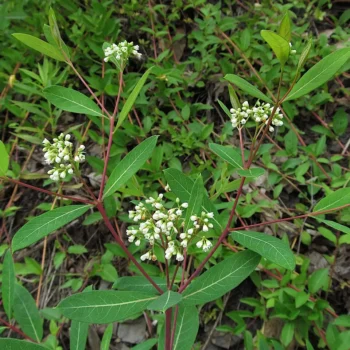
Indianhemp is a perennial forb that grows as a single-stemmed plant, reaching about 3.3 feet tall at maturity. Don’t let the name fool you – while it’s called cannabinum, it’s not related to cannabis at all. Instead, this member of the dogbane family earned its common name from Native Americans who used its strong fibers to make rope, nets, and textiles. The plant produces small, inconspicuous white flowers during summer and has simple, green oval leaves with a medium texture.
Where Does It Call Home?
Talk about a well-traveled native! Indianhemp has one of the most impressive geographical distributions of any North American plant. You’ll find it growing naturally across Canada (from British Columbia to Newfoundland) and throughout virtually every U.S. state, from Alabama to Wyoming. This widespread distribution tells us something important: this is one adaptable plant.
- Species observed
- No observations
The Good, The Bad, and The Toxic
Here’s where things get serious. While Indianhemp has many positive qualities, it comes with a major warning label: this plant is severely toxic. All parts of the plant contain cardiac glycosides that can be dangerous to humans and animals if ingested. This isn’t a plant for gardens where children or pets might be tempted to nibble.
That said, if you can manage it safely, Indianhemp offers several benefits:
- Excellent drought tolerance once established
- Attracts various pollinators including bees and butterflies
- Thrives in a wide range of soil conditions
- Perfect for naturalistic and prairie-style gardens
- Helps with erosion control
Growing Conditions and Care
Indianhemp is remarkably unfussy about its growing conditions, which explains its continent-spanning success. Here’s what it prefers:
- Soil: Adapts to coarse, medium, or fine-textured soils with pH ranging from 4.5 to 7.0
- Moisture: Facultative wetland status means it can handle both wet and dry conditions, though it uses high amounts of moisture when available
- Sun: Intermediate shade tolerance, but grows best in full sun to partial shade
- Hardiness: Extremely cold hardy (down to -43°F), suitable for USDA zones 3-9
- Precipitation: Tolerates annual rainfall from 15 to 60 inches
Planting and Propagation
Getting Indianhemp started in your garden can be challenging since there are no known commercial sources for seeds or plants. Your best bet is collecting seeds from wild populations (where legal and appropriate) or connecting with native plant societies and seed swaps.
The plant produces abundant seeds from summer through fall, with approximately 500,000 seeds per pound. Seeds don’t require cold stratification, making them relatively easy to germinate. You can also propagate through bare root divisions.
Important note: In Arkansas, Indianhemp has a rarity status of S1, meaning it’s critically imperiled in that state. If you’re gardening in Arkansas, please only use responsibly sourced material and consider whether planting it is appropriate for your situation.
Garden Design and Landscape Role
Indianhemp isn’t a showstopper, but it has its place in the right garden design. Consider it for:
- Native plant gardens and prairie restorations
- Naturalistic landscapes where you want authentic regional flora
- Areas needing erosion control
- Pollinator gardens (keeping toxicity in mind for placement)
- Low-maintenance areas where you want something truly native
The plant grows at a moderate rate with an erect, single-stem form. It’s not particularly ornamental, so think of it as a supporting player rather than a star performer in your landscape.
Should You Plant Indianhemp?
This really depends on your specific situation. Choose Indianhemp if you:
- Are creating authentic native habitat
- Want extremely low-maintenance plants
- Are working on erosion control projects
- Can safely manage toxic plants
- Have space for naturalistic plantings
Skip Indianhemp if you:
- Have children or pets who might ingest plants
- Want showy, ornamental plants
- Are looking for something with strong visual appeal
- Prefer non-toxic garden plants
The Bottom Line
Indianhemp represents the quiet resilience of North American native plants. While it may not dazzle with colorful blooms or dramatic foliage, it offers authenticity, adaptability, and ecological value that’s hard to match. Just remember to treat it with the respect its toxicity demands, and consider carefully whether it fits your garden’s safety requirements.
For most gardeners seeking native alternatives with similar benefits but less toxicity, consider exploring other regional natives that can provide comparable ecosystem services without the safety concerns. Your local native plant society can help you identify suitable alternatives that match your specific goals and growing conditions.