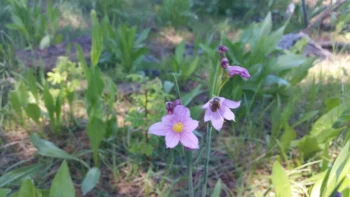
Inflated Grasswidow: A Charming Native Spring Bloomer for Western Gardens
If you’re looking for a delicate spring wildflower that perfectly captures the essence of the American West, let me introduce you to the inflated grasswidow (Olsynium douglasii var. inflatum). This petite perennial might not win any height contests, but what it lacks in stature, it more than makes up for in charm and resilience.
What Makes Inflated Grasswidow Special?
Don’t let the quirky common name fool you – this little beauty has nothing to do with actual grass or widows! The inflated grasswidow belongs to the iris family and produces stunning purple-blue flowers that seem to dance above slender, grass-like leaves. These blooms typically appear in early spring, often when snow is still melting, making them one of nature’s first colorful announcements that warmer weather is on its way.
As a native forb (that’s botanist speak for a non-woody flowering plant), this perennial has been gracing western landscapes long before European settlers arrived. It’s perfectly adapted to the boom-and-bust moisture cycles of its homeland.
Where Does It Call Home?
Inflated grasswidow is a true westerner, naturally occurring across several states and provinces including British Columbia, Idaho, Nevada, Oregon, Utah, and Washington. This plant has mastered the art of thriving in the diverse conditions found throughout the Pacific Northwest and intermountain regions.
- Species observed
- No observations
Why Plant Inflated Grasswidow in Your Garden?
There are several compelling reasons to consider adding this native charmer to your landscape:
- Early pollinator support: When most plants are still sleeping, inflated grasswidow is already feeding hungry bees and other early-season pollinators
- Low maintenance: Once established, this drought-tolerant native requires minimal care
- Perfect for challenging spots: Thrives in well-drained soils where other plants might struggle
- Authentic regional character: Adds genuine local flavor to native plant gardens
- Rock garden star: Its compact size and delicate appearance make it ideal for rock gardens and naturalized areas
Growing Conditions and Care
The good news is that inflated grasswidow isn’t particularly fussy, as long as you understand its basic needs:
Sunlight: Prefers full sun to partial shade. Morning sun with some afternoon protection works well in hotter climates.
Soil: Well-draining soil is absolutely essential. This plant cannot tolerate wet feet, especially during its summer dormancy period. Sandy or rocky soils are ideal.
Water: Moderate water during the growing season, but allow it to go dormant and dry during summer months – this mimics its natural habitat.
Climate: Hardy in USDA zones 4-8, making it suitable for most western gardeners.
Planting and Maintenance Tips
Getting your inflated grasswidow off to a good start is straightforward:
- Plant in fall or early spring when temperatures are cool
- Ensure excellent drainage – consider raised beds or slopes if your soil is heavy
- Space plants about 6-8 inches apart for a naturalized look
- Water regularly the first year, then reduce watering as the plant establishes
- Allow foliage to die back naturally in summer – resist the urge to water during dormancy
- Source plants from reputable native plant nurseries to ensure genetic authenticity
Design Ideas and Garden Companions
Inflated grasswidow works beautifully in several garden settings:
- Rock gardens: Plant among stones where drainage is naturally excellent
- Native plant gardens: Combine with other regional natives like penstemon, lupine, and native grasses
- Naturalized areas: Allow it to spread and create drifts in meadow-style plantings
- Container gardens: Perfect for shallow pots with excellent drainage
A Few Things to Keep in Mind
While inflated grasswidow is generally easy to grow, there are a few considerations:
This plant goes completely dormant in summer, disappearing above ground until the next spring. Some gardeners find this disconcerting, but it’s completely natural behavior. Mark the location so you don’t accidentally dig it up during its dormant period!
Also, while not extremely rare, inflated grasswidow isn’t as common in cultivation as some other natives. Always purchase from reputable sources that propagate their own plants rather than wild-collecting.
The Bottom Line
Inflated grasswidow might be small, but it’s mighty in character. For western gardeners seeking authentic regional plants that support early pollinators while requiring minimal care, this charming native deserves serious consideration. Just remember to give it the drainage it craves and respect its summer siesta, and you’ll be rewarded with delightful spring blooms year after year.
Whether you’re creating a dedicated native plant garden or simply want to add some local flair to your rock garden, inflated grasswidow proves that sometimes the best things really do come in small packages.