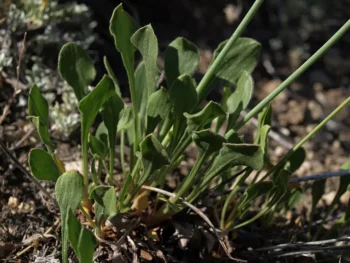
Inyo Buckwheat: A Rare Gem for the Water-Wise Garden
If you’re looking to add a touch of the Eastern Sierra Nevada’s wild beauty to your garden, Inyo buckwheat (Eriogonum latens) might just be the perfect choice. This charming native perennial brings both ecological value and understated elegance to drought-tolerant landscapes, though its rarity makes it a plant that deserves special consideration.
What Makes Inyo Buckwheat Special?
Inyo buckwheat is a delightful forb that grows as a low-spreading perennial herb. Don’t let the herb classification fool you—this isn’t something you’ll be seasoning your dinner with! In botanical terms, it simply means it’s a non-woody plant that dies back to ground level each winter, only to emerge again with renewed vigor come spring.
What really sets this plant apart is its silvery-green foliage topped with clusters of small, delicate flowers that range from white to soft pink. The blooms appear in dense, rounded clusters that seem to float above the leaves like tiny clouds—quite the sight when they catch the morning light!
Where Does It Call Home?
This lovely buckwheat is native to a fairly limited range in California and Nevada, primarily in the Eastern Sierra Nevada region and adjacent areas. It’s perfectly adapted to the challenging conditions of high desert and montane environments, making it a true survivor in landscapes where many other plants would struggle.
- Species observed
- No observations
A Word About Rarity
Here’s something important to know: Inyo buckwheat has a Global Conservation Status of S3, which means it’s considered vulnerable. With typically only 21 to 100 occurrences and between 3,000 to 10,000 individuals in the wild, this isn’t a plant you’ll find at every garden center. If you’re interested in growing it, please make sure to source it only from reputable native plant nurseries that propagate their own stock rather than wild-collecting.
Why Grow Inyo Buckwheat?
Despite—or perhaps because of—its rarity, there are compelling reasons to include this plant in your garden:
- Drought tolerance: Once established, it thrives with minimal water
- Pollinator magnet: The flowers attract bees, butterflies, and other native pollinators
- Low maintenance: Perfect for gardeners who prefer plants that take care of themselves
- Conservation value: Growing native plants helps support local ecosystems
- Unique beauty: Its subtle charm adds texture and interest to rock gardens and xeriscapes
Perfect Garden Situations
Inyo buckwheat shines in:
- Rock gardens and alpine-style plantings
- Xeriscape and drought-tolerant landscapes
- Native plant gardens focused on California or Nevada flora
- Slopes and areas with excellent drainage
- Containers for those wanting to try it in smaller spaces
Growing Conditions and Care
Think mountain meadow when planning for this plant. Inyo buckwheat thrives in:
- Sunlight: Full sun is essential
- Soil: Well-draining, sandy or rocky soil—heavy clay is a no-go
- Water: Drought-tolerant once established, but avoid overwatering at all costs
- Climate: Hardy in USDA zones 5-9
Planting and Care Tips
Getting Inyo buckwheat established successfully requires mimicking its natural habitat:
- Plant in fall or early spring when temperatures are moderate
- Ensure excellent drainage—consider raised beds or adding gravel to heavy soils
- Water sparingly during the first growing season, then reduce to minimal supplemental watering
- Avoid fertilizers, which can encourage weak, floppy growth
- Mulch lightly with gravel or decomposed granite rather than organic mulch
The Bottom Line
Inyo buckwheat is a wonderful choice for gardeners who appreciate subtle beauty and want to support native plant conservation. Its drought tolerance and pollinator appeal make it a valuable addition to water-wise gardens, while its rarity makes it a conversation starter among fellow native plant enthusiasts.
Just remember: if you decide to grow this special plant, source it responsibly and give it the well-drained, sunny conditions it craves. In return, you’ll have a unique piece of the American West’s natural heritage thriving right in your own backyard.