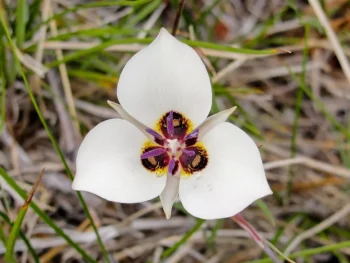
Inyo County Star-Tulip: A Rare California Native Worth Protecting
If you’re drawn to rare and beautiful native wildflowers, the Inyo County star-tulip (Calochortus excavatus) might just capture your heart. This delicate perennial bulb produces charming cup-shaped flowers that look like tiny tulips dancing in the mountain breeze. But before you rush to add one to your garden, there’s something important you need to know about this special plant.
A True California Native
The Inyo County star-tulip is a proud native of California, specifically endemic to the eastern Sierra Nevada region around Inyo County. This perennial forb belongs to the fascinating Calochortus genus, known for their distinctive three-petaled flowers and grass-like foliage. As a native plant, it has co-evolved with local wildlife and growing conditions over thousands of years.
- Species observed
- No observations
Why This Plant Deserves Special Attention
Here’s where things get serious: Calochortus excavatus has a Global Conservation Status of S2, meaning it’s considered Imperiled. With only 6 to 20 known occurrences and possibly fewer than 3,000 individual plants remaining in the wild, this star-tulip is fighting for survival. This rarity status makes it both incredibly special and concerning from a conservation perspective.
What Makes It Garden-Worthy
Despite its rarity challenges, the Inyo County star-tulip offers several appealing qualities for the right gardener:
- Distinctive cup-shaped flowers, typically white to pale pink with darker markings
- Low-growing, unobtrusive foliage that won’t overwhelm other plants
- Attracts native pollinators like small bees
- Perfect for specialized native plant collections
- Extremely drought-tolerant once established
Growing Conditions and Care
If you’re considering growing this rare beauty, it thrives in conditions that mimic its mountain homeland:
- Drainage: Excellent drainage is absolutely critical – soggy soil will kill the bulb
- Water: Prefers dry summer conditions after spring blooming
- Sunlight: Full sun to partial shade
- Soil: Well-draining, sandy or rocky soils
- Climate: Suitable for USDA zones 5-8, needs cold winter dormancy
The Responsible Gardener’s Dilemma
Here’s the thing about rare plants: while growing them can help preserve the species, it must be done responsibly. Never collect bulbs from the wild – this could push an already imperiled species closer to extinction. If you want to grow Calochortus excavatus, only purchase from reputable native plant nurseries that propagate from legally obtained, ethically sourced stock.
Many gardeners might want to consider supporting conservation efforts for this species rather than growing it personally, unless you’re an experienced native plant gardener with the right conditions.
Planting and Care Tips
If you do find responsibly sourced bulbs:
- Plant bulbs in fall, about 3-4 inches deep
- Choose a location with perfect drainage – consider raised beds or rock gardens
- Water during fall and spring, but keep dry during summer dormancy
- Mulch lightly with gravel rather than organic matter
- Be patient – it may take several years for bulbs to establish and bloom
Supporting Conservation
Whether or not you choose to grow this rare star-tulip, consider supporting organizations working to protect California’s native flora. The Inyo County star-tulip represents just one of many native species facing conservation challenges. By choosing native plants for our gardens and supporting habitat preservation, we can all play a role in protecting these botanical treasures for future generations.
Remember: with great beauty comes great responsibility, especially when dealing with imperiled species like our charming Calochortus excavatus.