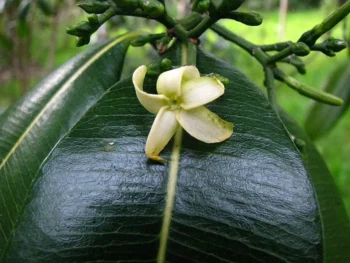
Island Yellowwood: A Rare Hawaiian Treasure for Your Native Garden
If you’re passionate about native Hawaiian plants and conservation gardening, the island yellowwood (Ochrosia haleakalae) might just capture your heart. This remarkable tree species represents one of Hawaii’s most precious botanical gems, though its rarity means growing it comes with special responsibilities.
What Makes Island Yellowwood Special?
Island yellowwood is a perennial tree that can reach impressive heights of 13-16 feet or more under ideal conditions. As a member of the dogbane family, this native Hawaiian species develops a distinctive single trunk, though environmental conditions sometimes encourage a more compact, multi-stemmed growth form.
The tree’s beauty lies in its combination of glossy green leaves, delicate white flowers, and striking red to orange fruits that add year-round visual interest to any landscape. It’s also known by the synonym Ochrosia hamakuaensis, though island yellowwood remains its most recognized common name.
Where Island Yellowwood Calls Home
This endemic species is found exclusively in Hawaii, with natural populations occurring on Maui and the Big Island. Its limited geographic distribution makes it a true island treasure.
- Species observed
- No observations
The Conservation Reality: Why This Tree Needs Our Help
Here’s where things get serious: island yellowwood carries a Global Conservation Status of S1, meaning it’s critically imperiled. In the United States, it’s classified as Endangered, with typically five or fewer occurrences and very few remaining individuals in the wild.
What this means for gardeners: While we absolutely encourage planting this magnificent native species, it’s crucial to source your plant material responsibly. Only purchase from reputable nurseries that propagate from legally obtained seeds or cuttings, never from wild-collected specimens.
Growing Island Yellowwood Successfully
If you’re committed to conservation gardening and can source island yellowwood responsibly, here’s what you need to know:
Growing Conditions
- Thrives in USDA hardiness zones 10-11 (tropical conditions)
- Prefers well-drained soils with consistent moisture
- Adapts to partial shade or full sun exposure
- Benefits from protection against strong winds
Care Tips
- Maintain steady watering schedule, especially during establishment
- Mulch around the base to retain soil moisture
- Provide wind protection in exposed locations
- Allow adequate space for mature size (13+ feet height)
Perfect Garden Roles for Island Yellowwood
Island yellowwood excels as a specimen tree in native Hawaiian gardens and conservation landscapes. Its moderate size makes it suitable for residential properties, while its ecological significance adds meaningful conservation value to any planting project.
The tree’s white flowers provide nectar for native Hawaiian insects, making it an excellent choice for pollinator-friendly gardens. Its fruits also offer potential food sources for native birds, though specific wildlife benefits require further documentation.
Is Island Yellowwood Right for Your Garden?
Consider island yellowwood if you:
- Live in tropical Hawaii (zones 10-11)
- Are committed to native plant conservation
- Can source plants from responsible, legal sources
- Want to support endangered species recovery
- Appreciate trees with year-round aesthetic appeal
Remember, growing endangered plants like island yellowwood isn’t just about gardening—it’s about participating in conservation efforts that help preserve Hawaii’s unique botanical heritage for future generations. Every responsibly grown island yellowwood tree represents hope for this species’ recovery.
Before purchasing, always verify that your source follows ethical propagation practices and contributes to conservation efforts rather than wild collection. Your garden can become part of the solution for preserving this remarkable Hawaiian native.