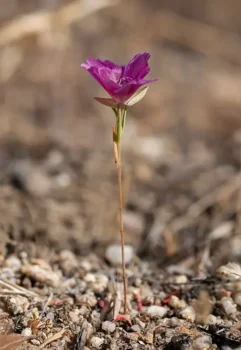
Jolon Clarkia: A Rare Gem for the Conservation-Minded Gardener
If you’re the type of gardener who gets excited about growing something truly special and rare, meet the Jolon clarkia (Clarkia jolonensis). This little wildflower might not be a household name, but it’s got a story that’ll make any native plant enthusiast’s heart skip a beat. Fair warning though – this isn’t your typical pick it up at the garden center kind of plant!
What Makes Jolon Clarkia Special?
The Jolon clarkia is what we call an annual forb – basically a soft-stemmed wildflower that completes its entire life cycle in just one growing season. What makes it absolutely fascinating is where it calls home: this little beauty is found in just one tiny corner of the world, specifically around Jolon in Monterey County, California.
With delicate pink to purple four-petaled flowers that bloom in spring and early summer, this slender plant brings a subtle elegance to any garden lucky enough to host it. The flowers have that classic cup-shaped Clarkia look, sitting prettily on narrow stems with equally narrow leaves.
A Truly Rare Native
Here’s where things get serious: Clarkia jolonensis is classified as S2, meaning it’s imperiled in the wild. With only 6 to 20 known occurrences and potentially just 1,000 to 3,000 individual plants remaining in nature, this species is hanging on by a thread. Its entire native range is limited to California, and more specifically, to a very small area in the Santa Lucia Mountains.
- Species observed
- No observations
Important Conservation Note: If you’re considering growing Jolon clarkia, please only obtain seeds or plants from reputable native plant societies or conservation organizations that can guarantee responsibly sourced material. Never collect from wild populations – every plant in the wild is precious for this species’ survival.
Is Jolon Clarkia Right for Your Garden?
This isn’t a plant for every gardener, but if you’re passionate about conservation and native plants, here’s what you need to know:
Perfect Garden Settings
- Native plant gardens focused on California endemics
- Wildflower meadows with other rare species
- Conservation gardens supporting endangered plants
- Specialized collections for serious native plant enthusiasts
Growing Conditions
Like many California natives, Jolon clarkia has some specific preferences that mirror its natural habitat in the chaparral and oak woodland margins:
- Sunlight: Full sun to partial shade
- Soil: Well-draining soil is absolutely essential
- Water: Minimal summer irrigation once established – think Mediterranean climate
- USDA Zones: 8-10, typical for coastal California
Planting and Care Tips
Growing Jolon clarkia successfully requires mimicking its natural life cycle:
- Direct seed in fall for natural winter stratification
- Ensure excellent drainage – soggy soil is a death sentence
- Reduce watering significantly in summer
- Allow plants to self-seed for future generations
- Avoid heavy fertilization – these plants are adapted to lean soils
Wildlife and Pollinator Benefits
Despite its small stature, Jolon clarkia pulls its weight in supporting local ecosystems. The flowers attract small native bees, butterflies, and other pollinators that have co-evolved with Clarkia species. In a native garden setting, it can be part of a pollinator pathway that supports biodiversity.
The Bottom Line
Should you plant Jolon clarkia? If you’re a dedicated native plant gardener with a passion for conservation, absolutely – but only with responsibly sourced material. This isn’t a plant for casual gardeners or those looking for low-maintenance color. It’s for gardeners who understand that sometimes growing a plant is about more than just pretty flowers – it’s about being part of a species’ survival story.
By growing Jolon clarkia responsibly, you’re not just adding a unique plant to your garden; you’re participating in conservation efforts for one of California’s rarest wildflowers. Just remember: every seed counts when there are so few left in the wild.