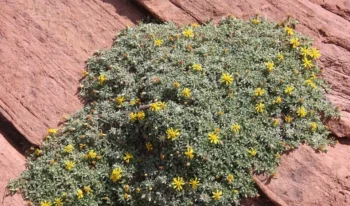
Jones’ False Goldenaster: A Rare Utah Treasure Worth Protecting
If you’re a gardener who loves supporting conservation efforts while adding unique native plants to your landscape, Jones’ false goldenaster might just capture your heart. This little-known perennial offers delicate yellow blooms and carries the important distinction of being one of Utah’s rarest wildflowers.
What is Jones’ False Goldenaster?
Jones’ false goldenaster (Heterotheca jonesii) is a native perennial forb that belongs to the sunflower family. Unlike woody shrubs or trees, this herbaceous plant lacks significant woody tissue and overwinters with buds at or below ground level. You might also see it listed under its former scientific name, Chrysopsis jonesii, in older botanical references.
This charming wildflower produces clusters of bright yellow, daisy-like flowers that bloom from late summer into fall, providing a cheerful splash of color when many other plants are winding down for the season.
Where Does It Grow Naturally?
Here’s what makes Jones’ false goldenaster truly special – it’s found exclusively in Utah, making it a true endemic treasure. This rare plant has adapted to the unique conditions of southeastern Utah’s landscape, where it grows in very limited locations.
- Species observed
- No observations
A Conservation Priority
Before we dive into growing tips, there’s something crucial every gardener needs to know: Jones’ false goldenaster carries a Global Conservation Status of S2, meaning it’s imperiled in the wild. With only 6 to 20 known populations and potentially fewer than 3,000 individual plants remaining, this species faces serious conservation challenges.
What this means for gardeners: If you’re interested in growing this plant, it’s absolutely essential to source it responsibly. Never collect plants or seeds from wild populations, as this could push the species closer to extinction. Instead, work with reputable native plant nurseries or conservation organizations that propagate plants from legally obtained, ethically sourced material.
Growing Jones’ False Goldenaster
Is It Right for Your Garden?
This isn’t your typical garden center perennial, and that’s exactly what makes it special. Jones’ false goldenaster is best suited for:
- Conservation-minded gardeners who want to help preserve rare species
- Native plant enthusiasts with specialized collections
- Rock garden or xerophytic landscape designers
- Educational gardens highlighting Utah’s unique flora
Growing Conditions
As a plant adapted to Utah’s challenging climate, Jones’ false goldenaster has some specific needs:
- Sunlight: Requires full sun exposure
- Soil: Must have excellent drainage; tolerates alkaline conditions
- Water: Drought-tolerant once established; avoid overwatering
- Hardiness: Suitable for USDA zones 4-8
Planting and Care Tips
Success with Jones’ false goldenaster requires attention to its native habitat preferences:
- Plant in well-draining soil – soggy conditions will likely kill this desert-adapted species
- Choose a sunny location that mimics its natural rocky, open habitat
- Water sparingly, especially once the plant is established
- Avoid fertilizers, as this plant is adapted to nutrient-poor soils
- Be patient – rare plants often grow slowly and may take time to establish
Supporting Pollinators and Wildlife
Like other members of the aster family, Jones’ false goldenaster provides valuable nectar and pollen for native bees, butterflies, and other pollinators. Its late-season blooms are particularly important, offering resources when many other flowers have finished for the year.
The Bottom Line
Jones’ false goldenaster represents something truly special – a chance to grow a piece of Utah’s unique natural heritage while supporting conservation efforts. However, this isn’t a plant for casual gardeners or those looking for easy-care perennials.
If you’re passionate about native plants and conservation, and you can source plants responsibly, Jones’ false goldenaster could be a meaningful addition to your specialized garden. Just remember that with great botanical treasures comes great responsibility – always prioritize the species’ conservation over personal collecting desires.
By growing this rare beauty responsibly, you’re not just adding an unusual plant to your garden – you’re becoming part of the effort to ensure that future generations can appreciate Utah’s remarkable endemic flora.