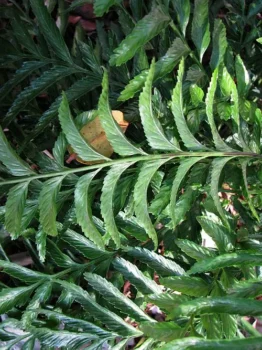
Kaulfuss’ Spleenwort: A Rare Hawaiian Fern Worth Knowing
Meet Kaulfuss’ spleenwort (Asplenium kaulfussii), a delicate Hawaiian fern that’s as rare as it is beautiful. This endemic species represents one of the unique treasures found only in the Hawaiian Islands, making it a special find for fern enthusiasts and native plant lovers alike.
What Makes This Fern Special?
Kaulfuss’ spleenwort is a perennial fern that belongs to the diverse Asplenium genus, commonly known as spleenworts. Like its relatives, this species produces elegant, divided fronds that create a lacy, delicate appearance in the landscape. The scientific name honors Georg Friedrich Kaulfuss, a German botanist who made significant contributions to fern taxonomy in the early 1800s.
This fern has quite a collection of historical names, including Asplenium enatum, Asplenium lydgatei, and Asplenium meiotomum, reflecting the complex history of fern classification and the challenges botanists faced in distinguishing between closely related species.
Where You’ll Find It
Kaulfuss’ spleenwort is endemic to Hawaii, meaning it exists nowhere else on Earth. This makes it a true Hawaiian native, evolved specifically for the unique conditions found across the Hawaiian Islands.
- Species observed
- No observations
A Word of Caution: Rarity Status
Here’s something important to know: Kaulfuss’ spleenwort has a conservation status of S2S3, indicating it’s considered uncommon to rare in its native range. This means the species faces some level of conservation concern, and wild populations may be limited or declining.
If you’re interested in growing this fern, it’s crucial to source it only from reputable nurseries that propagate their plants rather than collecting from wild populations. Never collect ferns from their natural habitat, as this can further threaten already vulnerable populations.
Is It Right for Your Garden?
Given its rarity status, Kaulfuss’ spleenwort isn’t typically available in regular garden centers. However, if you live in USDA hardiness zones 10-12 and can find responsibly propagated specimens, this fern could be a meaningful addition to:
- Native Hawaiian plant gardens
- Shaded tropical landscapes
- Conservation collections
- Rock gardens with filtered light
Growing Conditions
Like most Hawaiian ferns, Kaulfuss’ spleenwort likely prefers:
- Partial to full shade
- Consistent moisture without waterlogging
- Well-draining, organic-rich soil
- Protection from strong winds
- Warm, humid conditions
Supporting Conservation
As a fern, Kaulfuss’ spleenwort doesn’t offer nectar to pollinators like flowering plants do, but it still plays an important role in Hawaii’s native ecosystems. Ferns contribute to soil stability, provide habitat structure for small creatures, and maintain the moisture and microclimate conditions that other native species depend on.
If you’re passionate about Hawaiian native plants but can’t find or grow Kaulfuss’ spleenwort, consider supporting conservation efforts or growing other more readily available Hawaiian native ferns that can provide similar ecological benefits in your garden.
The Bottom Line
Kaulfuss’ spleenwort represents the incredible botanical diversity that makes Hawaii’s flora so special. While its rarity means it’s not a casual garden choice, knowing about and appreciating these unique species helps us understand the importance of protecting Hawaii’s native plant communities. If you do have the opportunity to grow this fern, treat it as the conservation treasure it truly is.