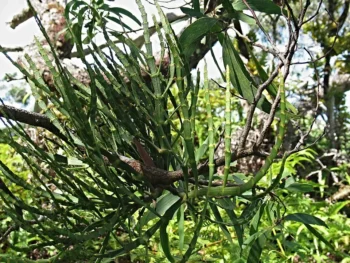
Kaumahana: Hawaii’s Mysterious Flattened Mistletoe
Meet Kaumahana (Korthalsella complanata), one of Hawaii’s most unusual and elusive native plants. This isn’t your typical garden variety specimen – it’s a fascinating parasitic mistletoe that’s as mysterious as it is rare. If you’ve ever wondered about Hawaii’s unique flora beyond the typical tropical favorites, Kaumahana offers a glimpse into the islands’ incredible botanical diversity.
What Makes Kaumahana Special?
Kaumahana is a perennial shrub, but don’t expect to see it growing from the ground like most plants. This clever little survivor is a parasitic mistletoe that makes its home on native Hawaiian trees, drawing nutrients from its host while creating its own distinctive appearance. The plant features flattened, segmented green stems that give it an almost architectural quality – like nature’s own geometric art installation.
As a member of Hawaii’s endemic flora, Kaumahana has evolved specifically to thrive in the Hawaiian Islands and exists nowhere else on Earth. This makes it a true treasure of Hawaiian biodiversity.
Where You’ll Find Kaumahana
Kaumahana calls Hawaii home exclusively, growing across multiple Hawaiian islands where conditions are just right. This parasitic mistletoe has adapted to Hawaii’s unique climate and ecosystem over thousands of years.
- Species observed
- No observations
A Plant in Need of Protection
Here’s where things get serious: Kaumahana has a Global Conservation Status of S3, meaning it’s considered vulnerable. With typically only 21 to 100 occurrences and between 3,000 to 10,000 individuals remaining, this little mistletoe is facing an uncertain future. Several factors contribute to its vulnerability:
- Very rare and local throughout its range
- Restricted to specific host trees
- Dependent on healthy native Hawaiian forest ecosystems
- Threatened by habitat loss and invasive species
Why You Can’t Grow Kaumahana in Your Garden
If you’re thinking about adding Kaumahana to your landscape, you’ll need to adjust those expectations. This isn’t a plant you can simply order from a nursery and pop into your garden bed. Here’s why:
As a parasitic mistletoe, Kaumahana requires specific host trees to survive – you can’t grow it independently. It has evolved complex relationships with native Hawaiian tree species, making it impossible to cultivate in traditional garden settings. The plant thrives in Hawaii’s tropical conditions (USDA hardiness zones 10-11) and needs the humid, specialized environment of Hawaiian forests.
Kaumahana’s Role in Nature
While Kaumahana might seem like it’s just freeloading off other plants, it actually plays important ecological roles. Like other mistletoes, it can provide food sources for wildlife and contributes to the complex web of relationships that make Hawaiian forests so special. Its unique growth form also adds to the structural diversity of forest canopies.
Supporting Hawaiian Native Plants
Since you can’t grow Kaumahana at home, how can you support this vulnerable species? Consider these alternatives:
- Support Hawaiian forest conservation organizations
- Choose other native Hawaiian plants for your tropical garden if you live in suitable zones
- Learn about and advocate for protecting Hawaii’s unique ecosystems
- Visit Hawaii responsibly and appreciate native plants in their natural habitats
The Bigger Picture
Kaumahana represents something larger than just one unusual plant – it’s a symbol of Hawaii’s incredible endemic flora and the urgent need for conservation. Every endemic species like Kaumahana that we lose is gone forever, taking with it millions of years of evolutionary history and unique genetic information.
While you might not be able to grow Kaumahana in your backyard, understanding and appreciating plants like this helps us recognize the incredible diversity of life on our planet and the importance of protecting these natural treasures for future generations.
Next time you hear about Hawaiian conservation efforts or native plant protection programs, remember little Kaumahana – a reminder that some of nature’s most fascinating creations are also among its most vulnerable.