Kauna’oa: Hawaii’s Rare Native Dodder Worth Protecting
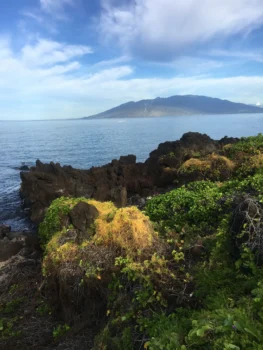
If you’ve ever wondered about the delicate orange threads you might spot weaving through native Hawaiian vegetation, you may have encountered kauna’oa (Cuscuta sandwichiana), one of Hawaii’s most unusual native plants. This isn’t your typical garden plant – in fact, it’s quite the opposite of what most gardeners would want to cultivate!
What Makes Kauna’oa So Unique?
Kauna’oa belongs to the dodder family, a group of parasitic plants that have evolved away from the typical plant lifestyle. Unlike most plants that create their own food through photosynthesis, kauna’oa has taken a different evolutionary path. This annual herb appears as thin, thread-like orange to yellow stems that completely lack leaves and wrap themselves around host plants to survive.
As a forb herb, kauna’oa is a vascular plant without any significant woody tissue. What makes it particularly fascinating is how it has adapted to life as a parasite, drawing nutrients and water directly from its host plants through specialized structures.
Where You’ll Find This Hawaiian Endemic
Kauna’oa is found exclusively in Hawaii, making it a true endemic species. This means it evolved in the Hawaiian Islands and exists nowhere else on Earth naturally. Its distribution is limited to the Hawaiian archipelago, where it plays a unique role in native ecosystems.
- Species observed
- No observations
A Plant That’s Better Admired Than Cultivated
Here’s where kauna’oa differs dramatically from typical garden plants – you really shouldn’t try to grow it in your garden, and here’s why:
- Conservation concerns: Kauna’oa has a Global Conservation Status of S2?, indicating it may be imperiled and needs protection
- Parasitic nature: It requires specific host plants to survive, making cultivation extremely challenging
- Ecological role: It’s best left in its natural habitat where it contributes to native ecosystem balance
- Specialized needs: As a tropical species, it only thrives in USDA hardiness zones 11-12
Why Kauna’oa Matters
While you shouldn’t plant kauna’oa in your garden, understanding and appreciating this unique species is important for several reasons. As a native Hawaiian plant with uncertain conservation status, every population of kauna’oa represents irreplaceable genetic diversity that has evolved over thousands of years in isolation.
The small white flowers that kauna’oa produces may provide nectar for native Hawaiian insects, contributing to the complex web of relationships that make up healthy native ecosystems. By supporting habitat conservation and native plant restoration efforts, you can help ensure that future generations will still be able to observe this remarkable plant in the wild.
Supporting Native Hawaiian Plants Instead
If you’re inspired by Hawaii’s unique flora and want to support native plants, consider these alternatives:
- Support native habitat restoration projects in Hawaii
- Choose other native Hawaiian plants that are more suitable for cultivation
- Donate to organizations working to protect rare Hawaiian species
- Learn about and advocate for the protection of endemic Hawaiian ecosystems
The Bigger Picture
Kauna’oa serves as a reminder that not every native plant is meant for our gardens – and that’s perfectly okay! Some species, especially rare and specialized ones like this parasitic dodder, are best appreciated in their natural settings. By understanding and respecting the unique needs of plants like kauna’oa, we become better stewards of the incredible botanical diversity that makes places like Hawaii so special.
The next time you’re in Hawaii and spot those distinctive orange threads weaving through native vegetation, take a moment to appreciate kauna’oa for what it is: a remarkable example of evolutionary adaptation and a irreplaceable piece of Hawaii’s natural heritage that deserves our protection and respect.