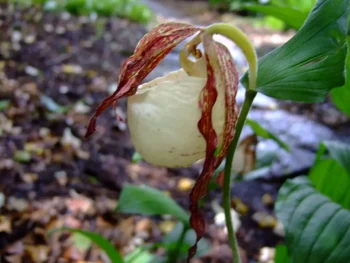
Kentucky Lady’s Slipper: A Rare Native Orchid Worth Protecting
Meet the Kentucky lady’s slipper (Cypripedium kentuckiense), one of North America’s most spectacular native orchids. This stunning perennial is like finding a hidden treasure in the woods – beautiful, rare, and absolutely captivating when you’re lucky enough to spot one in the wild.
What Makes Kentucky Lady’s Slipper Special
The Kentucky lady’s slipper is a showstopper with its distinctive pouch-shaped yellow lip and rich burgundy petals that bloom in late spring. As a herbaceous perennial, it emerges each year from underground rhizomes, reaching heights of 1-3 feet when mature. The large, pleated leaves create an elegant backdrop for the exotic-looking flowers that seem almost too fancy for the forest floor.
Where You’ll Find This Native Beauty
This remarkable orchid calls the southeastern and south-central United States home, naturally occurring in Alabama, Arkansas, Georgia, Kentucky, Louisiana, Mississippi, Oklahoma, Tennessee, Texas, and Virginia. It’s truly a southern belle of the plant world!
- Species observed
- No observations
A Word of Caution: Rarity Matters
Here’s where things get serious – the Kentucky lady’s slipper has a Global Conservation Status of S3, meaning it’s considered vulnerable throughout its range. In some states like Alabama, it’s even rarer with an S1 status. This isn’t just another pretty plant; it’s a species that needs our protection.
If you’re thinking about adding this orchid to your garden, please proceed with extreme caution and responsibility. Only purchase from reputable sources that can guarantee the plants were ethically propagated, never wild-collected.
Growing Conditions and Care
Let’s be honest – growing Kentucky lady’s slippers is not for the faint of heart. These orchids are incredibly finicky and have very specific requirements:
- Light: Partial to full shade
- Soil: Rich, moist, well-draining soil with neutral to slightly alkaline pH
- Moisture: Consistent moisture without waterlogging
- Hardiness: USDA zones 5-8
- Special needs: Requires specific mycorrhizal fungi to survive
The biggest challenge? These orchids depend on a complex relationship with soil fungi (mycorrhizae) that’s nearly impossible to replicate in most garden settings. Even experienced growers struggle with these plants.
Garden Role and Design Ideas
In the rare instance where you successfully grow Kentucky lady’s slippers, they make incredible specimen plants for woodland gardens or shaded native plant areas. They’re perfect conversation starters and can serve as the crown jewel of a shade garden. However, their unpredictable nature means you shouldn’t count on them as reliable landscape elements.
Pollinator and Wildlife Benefits
These orchids have evolved fascinating pollination strategies, primarily attracting native bees through their unique flower structure. The specialized pollination system contributes to their rarity – they’re picky about their pollinators just like they’re picky about their growing conditions!
Should You Plant Kentucky Lady’s Slipper?
Here’s our honest recommendation: unless you’re an experienced orchid grower with a deep understanding of native plant conservation, consider admiring these beauties in their natural habitat instead. If you absolutely must try growing them:
- Only purchase from verified ethical sources
- Never dig plants from the wild
- Be prepared for possible failure
- Consider supporting conservation efforts instead
Sometimes the best way to love a plant is to leave it where it belongs – thriving in the wild spaces where it can continue to enchant future generations of nature lovers.
The Bottom Line
The Kentucky lady’s slipper is undeniably gorgeous and holds special significance as a native species, but its rarity and extremely challenging growing requirements make it better suited for conservation programs than backyard gardens. Instead of risking the disappointment (and expense) of trying to grow this finicky beauty, consider visiting native plant preserves where you can appreciate these orchids in their element while supporting their long-term survival.