Kidneyleaf Grass of Parnassus: A Rare Wetland Gem Worth Protecting
If you’ve ever stumbled across a delicate white flower with fringed petals growing in a boggy area, you might have discovered one of the Southeast’s most charming—and increasingly rare—native wildflowers. Meet the kidneyleaf grass of Parnassus (Parnassia asarifolia), a plant that’s as unique as its name suggests.
What Makes This Plant Special?
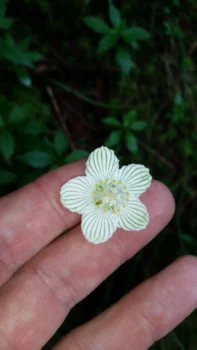
Don’t let the grass in its name fool you—this perennial forb is definitely not a grass! Kidneyleaf grass of Parnassus is a herbaceous wildflower that produces stunning white flowers with distinctively fringed petals and prominent green veining. The kidney-shaped basal leaves give this plant its common name and create an attractive rosette that persists throughout the growing season.
This native beauty belongs exclusively to the lower 48 states, naturally occurring across the southeastern and south-central regions. You’ll find it growing wild in Alabama, Arkansas, Georgia, Kentucky, Maryland, North Carolina, South Carolina, Tennessee, Texas, Virginia, and West Virginia.
- Species observed
- No observations
A Plant That Loves Its Wetlands
Here’s where kidneyleaf grass of Parnassus gets particular: it’s classified as an obligate wetland plant across all regions where it grows. This means it almost always occurs in wetlands and requires consistently moist to wet soil conditions to thrive. Think bogs, seeps, wet meadows, and the edges of streams—these are this plant’s happy places.
The Rarity Factor: Handle with Care
Before you get too excited about adding this beauty to your garden, there’s something important to know: kidneyleaf grass of Parnassus is becoming increasingly rare in the wild. In Alabama, it carries a rarity status of S2 (imperiled), while in Arkansas, it’s ranked S1 (critically imperiled). These rankings mean wild populations are small and vulnerable.
If you’re interested in growing this plant, please only source it from reputable native plant nurseries that propagate their own stock rather than wild-collecting. Better yet, consider supporting conservation efforts that protect existing wild populations.
Garden Design and Landscape Role
Kidneyleaf grass of Parnassus isn’t your typical garden perennial—it’s a specialist that requires very specific conditions. This plant excels in:
- Bog gardens with consistently saturated soil
- Rain gardens that hold water for extended periods
- Naturalized wetland restoration projects
- Specialized native plant collections
Its delicate white flowers and attractive foliage make it a lovely addition to any wetland garden, where it can serve as a conversation starter and a testament to your commitment to native plant conservation.
Growing Conditions and Care
Successfully growing kidneyleaf grass of Parnassus requires recreating its natural wetland habitat. Here’s what this finicky beauty needs:
- Moisture: Consistently wet to moist soil—never let it dry out
- Light: Partial shade to full sun
- Soil: Acidic to neutral pH, rich in organic matter
- Temperature: Cool, humid conditions (USDA Zones 5-8)
- Drainage: Paradoxically needs both constant moisture and good water movement
Pollinator and Wildlife Benefits
The unique fringed flowers of kidneyleaf grass of Parnassus attract a variety of small pollinators, including specialized wetland bees and flies. These insects have co-evolved with bog plants and depend on flowers like these for nectar and pollen throughout the growing season.
The Bottom Line: Is This Plant Right for You?
Kidneyleaf grass of Parnassus is undoubtedly beautiful and ecologically valuable, but it’s not for every gardener. Consider this plant if you:
- Have experience with bog or wetland gardening
- Can provide consistently wet conditions
- Want to support rare native plant conservation
- Enjoy the challenge of growing specialized plants
However, if you’re looking for an easy-care native perennial for typical garden conditions, you might want to explore other southeastern natives that are more adaptable and less rare.
Remember, every rare plant we successfully grow and protect in cultivation is a small victory for conservation. If you’re up for the challenge, kidneyleaf grass of Parnassus might just become the crown jewel of your wetland garden—and you’ll be helping preserve a piece of our native botanical heritage for future generations.