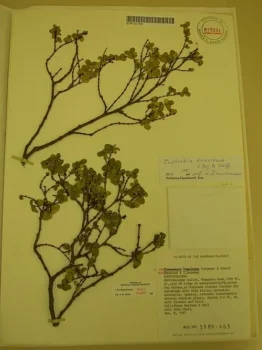
Kokomalei: Hawaii’s Critically Endangered Native Shrub
Meet kokomalei (Chamaesyce kuwaleana), one of Hawaii’s rarest native plants that most gardeners will never encounter – and for good reason. This critically endangered Hawaiian endemic is fighting for survival in the wild, making it a plant that deserves our respect and protection rather than a spot in our home gardens.
What Makes Kokomalei Special
Kokomalei belongs to the spurge family and was once known scientifically as Euphorbia kuwaleana. This perennial shrub is a true Hawaiian native, found nowhere else on Earth. Like many island endemics, it has evolved unique characteristics that make it perfectly adapted to Hawaii’s specific environmental conditions.
Where Kokomalei Calls Home
This rare shrub is native exclusively to Hawaii, where it clings to existence in very limited locations. With only five or fewer known occurrences and fewer than 1,000 individual plants remaining in the wild, kokomalei has earned the sobering distinction of being classified as S1 – critically imperiled.
- Species observed
- No observations
A Shrub on the Brink
As a multi-stemmed woody plant, kokomalei typically grows as a shrub reaching less than 13-16 feet in height. However, what’s most important to understand about this plant isn’t its growth habits – it’s its precarious conservation status. The species is officially listed as Endangered in the United States, meaning it faces imminent extinction without immediate conservation efforts.
Why You Shouldn’t Plant Kokomalei (And What to Do Instead)
Here’s the bottom line: kokomalei is far too rare and endangered for home cultivation. Every remaining plant in the wild is precious, and removing seeds or cuttings from wild populations could push this species closer to extinction. Even well-meaning gardeners could inadvertently harm conservation efforts.
If you’re drawn to rare Hawaiian natives, consider these alternatives:
- Work with local native plant societies to support conservation efforts
- Choose other Hawaiian native plants that are more stable and available through ethical sources
- Donate to organizations working to protect Hawaii’s endangered flora
- Visit botanical gardens or preserves where you might see kokomalei in protected settings
Supporting Conservation Efforts
The best thing any plant lover can do for kokomalei is to support conservation organizations working to protect Hawaii’s native ecosystems. These groups are working tirelessly to study, protect, and potentially propagate this species in controlled environments where it might have a fighting chance at recovery.
While we can’t invite kokomalei into our gardens, we can certainly keep it in our hearts and support the dedicated scientists and conservationists working to ensure this unique Hawaiian treasure doesn’t disappear forever. Sometimes the most loving thing we can do for a plant is to admire it from afar and protect the wild spaces where it belongs.