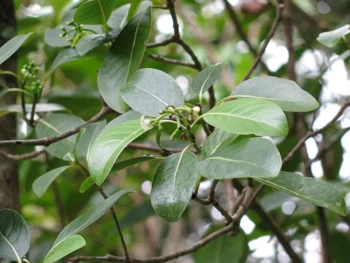
Kopiko Kea: A Rare Hawaiian Gem Worth Growing Responsibly
If you’re passionate about Hawaiian native plants and want to add something truly special to your garden, let me introduce you to kopiko kea (Psychotria kaduana). This endemic Hawaiian shrub is more than just a pretty face – it’s a rare treasure that plays an important role in Hawaii’s native ecosystems.
What Makes Kopiko Kea Special
Kopiko kea is a perennial shrub that typically grows as a multi-stemmed woody plant, usually staying under 13-16 feet in height. What really sets this plant apart is its status as a Hawaiian endemic – you won’t find it growing wild anywhere else in the world. The plant produces clusters of small white flowers followed by attractive berries that ripen to a beautiful red color, creating year-round interest in your garden.
Where You’ll Find It Growing Wild
This special shrub is native exclusively to the Hawaiian Islands, where it thrives in the mesic to wet forests that characterize much of Hawaii’s interior landscapes. In its natural habitat, kopiko kea serves as an important understory plant, creating habitat for native wildlife.
- Species observed
- No observations
A Word About Rarity
Here’s something important to know: kopiko kea has a Global Conservation Status of S2S3, which means it’s considered imperiled to vulnerable. This makes it a plant that deserves our respect and careful consideration. If you’re thinking about adding kopiko kea to your garden, please make sure you source it responsibly from reputable native plant nurseries that propagate from ethically collected seeds or cuttings.
Why Gardeners Love Kopiko Kea
There are several compelling reasons to consider this native Hawaiian beauty:
- Supports native Hawaiian ecosystems and wildlife
- Attracts native pollinators including birds and insects
- Perfect for understory plantings in shade gardens
- Glossy green foliage provides year-round structure
- Beautiful flowering and fruiting display
- Helps preserve Hawaii’s botanical heritage
Growing Conditions That Make Kopiko Kea Happy
Kopiko kea is surprisingly adaptable when you give it the right conditions. This shrub prefers partial to full shade – think of it as nature’s way of telling you it evolved as an understory plant. It thrives in moist, well-draining soil with high humidity, much like its native forest habitat.
The plant has a wetland status of Facultative Upland, which means it usually grows in non-wetland areas but can handle some wetland conditions. This flexibility makes it easier to incorporate into various garden settings.
Best Garden Settings
Kopiko kea shines in several garden types:
- Native Hawaiian landscape gardens
- Forest or woodland gardens
- Shade gardens under larger trees
- Rain gardens with good drainage
- Wildlife habitat gardens
Climate Requirements
Being a tropical Hawaiian native, kopiko kea needs warm conditions year-round. It’s suited for USDA hardiness zones 10-11, which means it can handle minimum temperatures of 30-40°F. If you live outside these zones, you might consider growing it in a greenhouse or as a container plant that can be brought indoors during cold weather.
Planting and Care Tips
Successfully growing kopiko kea isn’t too tricky once you understand its needs:
- Plant in partial to full shade locations
- Ensure consistent moisture without waterlogging
- Use well-draining, organic-rich soil
- Apply organic mulch to retain moisture and suppress weeds
- Protect from strong winds which can damage branches
- Maintain high humidity levels when possible
- Water regularly during dry periods
The Bottom Line
Kopiko kea is a wonderful choice for gardeners who want to support native Hawaiian plants while adding something unique and beautiful to their landscape. Its rarity makes it extra special – you’ll be growing a piece of Hawaii’s natural heritage. Just remember to source your plants responsibly and give them the shade, moisture, and protection they need to thrive.
Whether you’re creating a native Hawaiian garden or simply want to add an unusual and meaningful plant to your collection, kopiko kea offers beauty, ecological value, and the satisfaction of helping preserve a rare native species for future generations.