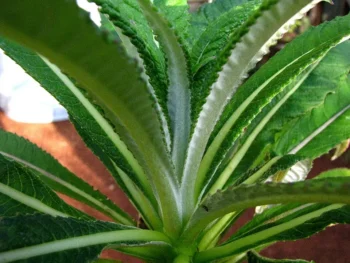
Kuhi’aikamo’owahie: A Rare Hawaiian Treasure Worth Protecting
Meet kuhi’aikamo’owahie (Lobelia hypoleuca), one of Hawaii’s most precious and vulnerable native plants. This remarkable species represents the unique botanical heritage of the Hawaiian Islands, but it’s not one you’ll want to add to your garden wish list – and for very good reason.
A Plant with a Story to Tell
Kuhi’aikamo’owahie belongs to the bellflower family and stands as a testament to Hawaii’s incredible plant diversity. As a perennial shrub, this multi-stemmed woody plant typically grows less than 13-16 feet tall, with several stems emerging from near the ground. Like many island species, it has evolved unique characteristics that make it perfectly suited to its Hawaiian home.
Where in the World?
This special plant is found exclusively in Hawaii – it’s what botanists call an endemic species, meaning it exists nowhere else on Earth. Its entire world consists of the Hawaiian Islands, making it an irreplaceable part of the archipelago’s natural heritage.
- Species observed
- No observations
Why You Shouldn’t Plant It (And Why That’s Actually Good News)
Here’s the important part: Kuhi’aikamo’owahie has a Global Conservation Status of S3, meaning it’s considered vulnerable. With only 21-100 known occurrences and between 3,000-10,000 individuals estimated to exist worldwide, this plant is fighting for survival.
This rarity means that if you’re interested in growing kuhi’aikamo’owahie, you should only consider it with responsibly sourced material from legitimate conservation programs. For most home gardeners, the best way to help this species is to appreciate it from afar and support conservation efforts rather than attempting to cultivate it.
Growing Conditions and Care
While specific growing requirements for kuhi’aikamo’owahie aren’t well-documented due to its rarity, we do know a few things:
- It’s adapted to Hawaiian tropical conditions
- The plant has a facultative wetland status, meaning it can grow in both wetland and non-wetland environments
- As a Hawaiian endemic, it likely prefers the specific climate conditions found in its native habitat
- It’s suited for tropical hardiness zones (approximately USDA zones 10-12)
Better Alternatives for Your Garden
Instead of trying to grow this rare treasure, consider supporting Hawaiian native plant conservation by choosing other native Hawaiian species that are more readily available and appropriate for cultivation. Many beautiful Hawaiian natives can thrive in appropriate climates while supporting local ecosystems without putting pressure on vulnerable species.
The Bigger Picture
Kuhi’aikamo’owahie serves as a reminder that not every beautiful plant is meant for our gardens. Sometimes the most meaningful way to connect with a species is to learn about it, respect its wild spaces, and support the conservation efforts working to ensure it survives for future generations.
By understanding and respecting the rarity of species like kuhi’aikamo’owahie, we become better stewards of the incredible plant diversity that makes places like Hawaii so special. Every rare plant that continues to thrive in its natural habitat is a victory worth celebrating.