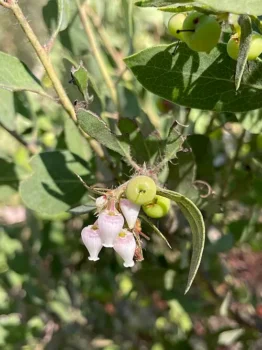
La Panza Manzanita: A Rare California Native Worth Growing Responsibly
If you’re looking for a stunning native California shrub that’s both beautiful and beneficial to local wildlife, La Panza manzanita (Arctostaphylos pilosula) might just be your perfect match. This charming evergreen shrub brings year-round interest to gardens while supporting the local ecosystem – though its rarity means you’ll want to source it responsibly.
What Makes La Panza Manzanita Special
La Panza manzanita is a true California treasure, endemic to the La Panza Range in San Luis Obispo County. This perennial shrub typically grows as a multi-stemmed woody plant, usually staying under 13-16 feet tall, making it perfect for residential landscapes. What really sets this manzanita apart is its stunning combination of features: delicate white to pink bell-shaped flowers that bloom in winter and spring, attractive smooth reddish bark that peels to reveal fresh layers beneath, and small oval evergreen leaves that provide year-round structure.
Where Does It Grow Naturally?
This special manzanita calls California home, specifically thriving in the coastal mountains of San Luis Obispo County. As a native plant of the lower 48 states, it’s perfectly adapted to California’s Mediterranean climate and soil conditions.
- Species observed
- No observations
Important Conservation Note
Here’s something every responsible gardener should know: La Panza manzanita has a Global Conservation Status of S3, meaning it’s considered vulnerable. With typically only 21 to 100 occurrences or between 3,000 and 10,000 individuals in the wild, this plant is quite rare. If you decide to grow it, please only purchase from reputable native plant nurseries that propagate their plants responsibly rather than collecting from wild populations.
Why Grow La Panza Manzanita in Your Garden?
There are plenty of compelling reasons to include this beautiful native in your landscape:
- Pollinator magnet: The winter and spring flowers provide crucial nectar for native bees, butterflies, and hummingbirds when few other plants are blooming
- Wildlife benefits: Birds love the small red berries that follow the flowers
- Drought tolerance: Once established, it requires minimal water – perfect for water-wise gardening
- Year-round beauty: Evergreen foliage, interesting bark, seasonal flowers, and colorful berries provide four-season interest
- Low maintenance: This tough shrub needs very little care once it’s settled in
Perfect Garden Settings
La Panza manzanita shines in several garden styles:
- Native California gardens where it can mingle with other indigenous plants
- Mediterranean-style landscapes that celebrate drought-tolerant beauty
- Xeriscape gardens focused on water conservation
- Wildlife habitat gardens designed to support local fauna
- Slope plantings where its root system helps prevent erosion
Growing Conditions and Care
The good news is that La Panza manzanita isn’t particularly fussy once you understand its needs. This shrub thrives in USDA hardiness zones 8-10, making it suitable for most of California and similar climates.
Soil requirements: Well-draining, slightly acidic soil is essential. Like most manzanitas, this plant absolutely cannot tolerate soggy conditions, so drainage is crucial.
Light needs: Full sun to partial shade works well, though it tends to flower more prolifically in sunnier spots.
Water requirements: While it needs regular water to establish (usually the first year or two), mature plants are quite drought tolerant and actually prefer to stay on the dry side.
Planting and Care Tips
Success with La Panza manzanita starts with proper planting:
- Timing: Plant in fall when temperatures cool but soil is still warm
- Soil preparation: Amend heavy clay soils with coarse sand or gravel to improve drainage
- Mulching: Apply a thin layer of organic mulch around the base, keeping it away from the trunk
- Watering: Water deeply but infrequently once established – overwatering is more dangerous than underwatering
- Pruning: Light pruning after flowering can help maintain shape, but avoid heavy pruning
The Bottom Line
La Panza manzanita offers gardeners a chance to grow something truly special – a beautiful, wildlife-supporting native plant that’s perfectly adapted to California conditions. While its vulnerable status means we need to be thoughtful about sourcing, growing this rare beauty in our gardens can actually help ensure its survival while bringing joy and ecological benefits to our outdoor spaces. Just remember to buy only from reputable nurseries that propagate their plants ethically, and you’ll be contributing to conservation while enjoying one of California’s most charming native shrubs.