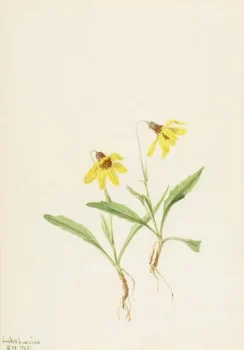
Lake Louise Arnica: A Rare Alpine Gem for Specialized Gardens
If you’re dreaming of bringing a piece of the Canadian Rockies to your garden, Lake Louise arnica (Arnica louiseana) might just be the alpine treasure you’re looking for. This charming perennial wildflower is as special as it is beautiful – and as challenging as it is rewarding to grow.
What Makes Lake Louise Arnica Special?
Lake Louise arnica is a true Canadian native, found exclusively in the alpine and subalpine regions of Alberta and British Columbia. This perennial forb produces stunning yellow, daisy-like flowers that can reach 2-3 inches across, creating brilliant splashes of gold against the rocky mountain landscape during summer blooms.
As a member of the sunflower family, this low-growing wildflower has captured the hearts of alpine plant enthusiasts with its cheerful blooms and hardy mountain spirit. However, there’s something important every gardener should know before falling head-over-heels for this beauty.
A Word of Caution: This is a Rare Plant
Here’s where things get serious. Lake Louise arnica has a Global Conservation Status of S3, meaning it’s considered vulnerable throughout its range. With typically only 21 to 100 occurrences and between 3,000 to 10,000 individuals in the wild, this isn’t your everyday garden center purchase.
If you’re considering growing Lake Louise arnica, please only source it from reputable native plant nurseries that propagate their stock responsibly. Never collect from wild populations – this rare beauty needs our protection, not our exploitation.
Where Does Lake Louise Arnica Call Home?
This alpine specialist is native to Canada, specifically thriving in the mountainous regions of Alberta and British Columbia. In the wild, you’ll find it growing in rocky, well-draining soils at high elevations where summers are cool and winters are long and cold.
- Species observed
- No observations
Is Lake Louise Arnica Right for Your Garden?
Let’s be honest – this isn’t a plant for everyone or every garden. Lake Louise arnica has very specific needs that can be challenging to meet outside its natural mountain habitat.
Perfect For:
- Rock gardens with excellent drainage
- Alpine plant collections
- Specialized native plant gardens
- Naturalized mountain landscapes
- Cool-climate gardens in zones 2-5
Not Suitable For:
- Hot, humid climates
- Heavy clay soils
- Low-elevation gardens in warm zones
- Areas with poor drainage
- Beginning gardeners looking for easy-care plants
Growing Conditions: Mimicking the Mountains
Success with Lake Louise arnica means recreating its mountain home as closely as possible:
- Soil: Well-draining, rocky or sandy soil is absolutely essential
- Light: Full sun to partial shade, with protection from hot afternoon sun
- Temperature: Cool summers and cold winters (USDA zones 2-5)
- Moisture: Consistent moisture during growing season, but never waterlogged
- Drainage: Excellent drainage is non-negotiable
Planting and Care Tips
Growing this mountain native requires patience and attention to detail:
- Plant in early spring or fall when temperatures are cool
- Ensure your planting site has sharp drainage – consider raised beds or rock gardens
- Mulch with gravel or small stones rather than organic matter
- Water regularly during the growing season, but allow soil to dry between waterings
- Protect from hot, drying winds
- Be patient – alpine plants often take time to establish
Benefits to Pollinators and Wildlife
When grown successfully, Lake Louise arnica provides valuable nectar and pollen for mountain-adapted bees, butterflies, and other native pollinators. Its bright blooms are particularly attractive to alpine butterfly species and native bees that have co-evolved with this plant in its mountain habitat.
The Bottom Line
Lake Louise arnica is a stunning alpine plant that can be a real showstopper in the right garden setting. However, its rarity in the wild means it comes with both responsibility and challenge. If you have the right growing conditions and can source it responsibly, this rare beauty can be a meaningful addition to a specialized native plant collection.
Just remember: with great beauty comes great responsibility. Help protect this vulnerable species by only purchasing from ethical sources and never collecting from wild populations. Your garden – and future generations of both plants and plant lovers – will thank you.