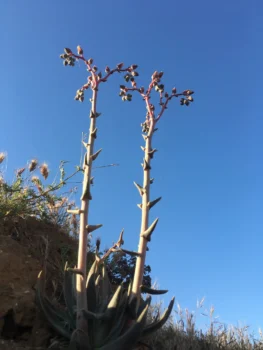
Lanceleaf Liveforever: A Stunning California Native Succulent for Your Garden
If you’re looking for a drought-tolerant showstopper that’s perfectly adapted to California’s climate, meet the lanceleaf liveforever (Dudleya lanceolata). This gorgeous native succulent might just be the perfect addition to your water-wise garden, though there are a few important things to know before you start shopping for one.
What is Lanceleaf Liveforever?
Lanceleaf liveforever is a perennial succulent that forms attractive rosettes of thick, lance-shaped leaves. The leaves typically display beautiful blue-green to gray-green coloring that can take on subtle color variations depending on growing conditions. As a forb (a non-woody plant), this species lacks significant woody tissue and maintains its perennial nature through buds located at or below ground level.
You might also encounter this plant under several botanical synonyms in older references, including Dudleya brauntonii, Dudleya congesta, and Dudleya goldmanii, among others. But regardless of what name you see it listed under, you’re looking at the same remarkable plant.
Where Does It Come From?
This beauty is a true California native, naturally occurring in the Golden State’s coastal regions and Channel Islands. As a plant species native to the lower 48 states, it’s perfectly adapted to the unique Mediterranean climate and soil conditions found in Southern California.
- Species observed
- No observations
A Word About Conservation
Here’s something important to keep in mind: lanceleaf liveforever has a Global Conservation Status of S3?, which indicates some level of rarity or vulnerability. This means if you decide to add this plant to your garden (and we think you should!), it’s crucial to source it responsibly from reputable native plant nurseries rather than collecting from the wild. By growing this species in cultivation, you’re actually helping support its conservation.
Why Grow Lanceleaf Liveforever?
There are plenty of reasons to fall in love with this native succulent:
- Stunning visual appeal: The rosette form and distinctive lance-shaped leaves create architectural interest in any garden setting
- Spectacular flowers: In spring and summer, tall flower spikes emerge with clusters of yellow to red blooms that are absolutely eye-catching
- Pollinator magnet: Those beautiful flowers attract bees, butterflies, and hummingbirds, supporting local wildlife
- Drought tolerance: Once established, this plant thrives with minimal water – perfect for California’s dry summers
- Low maintenance: Native plants are naturally adapted to local conditions, meaning less work for you
Perfect Garden Settings
Lanceleaf liveforever shines in several garden styles:
- Rock gardens: Its succulent nature makes it perfect for tucking between stones
- Mediterranean landscapes: Pairs beautifully with other drought-tolerant natives
- Coastal gardens: Naturally adapted to coastal conditions and salt air
- Xeriscape designs: An excellent choice for water-wise landscaping
- Container gardens: Works wonderfully in pots for patios and small spaces
Growing Conditions and Care
The key to success with lanceleaf liveforever is thinking like the plant – it wants conditions similar to its native coastal habitat.
Climate: This plant thrives in USDA hardiness zones 9-11, making it perfect for most of California’s coastal and inland valleys.
Light: Provide full sun to partial shade. In very hot inland areas, some afternoon shade can be beneficial.
Soil: Well-draining soil is absolutely essential. This succulent cannot tolerate soggy conditions, so amend heavy clay soils with sand, gravel, or pumice to improve drainage.
Water: Once established, water sparingly. During the first growing season, provide occasional deep watering to help establish roots, then reduce frequency significantly. These plants are adapted to survive California’s dry summers with little to no supplemental water.
Planting and Care Tips
- Planting time: Fall is ideal for planting, allowing roots to establish during cooler, wetter months
- Spacing: Give plants adequate space for air circulation to prevent fungal issues
- Mulch carefully: If using mulch, keep it away from the base of the plant to prevent rot
- Fertilizer: Generally unnecessary – native plants prefer lean soils
- Frost protection: In areas that occasionally dip below freezing, provide protection during cold snaps
- Avoid overwatering: The number one killer of succulents is too much water, especially during winter months
The Bottom Line
Lanceleaf liveforever is a fantastic choice for California gardeners seeking a beautiful, low-maintenance native plant that supports local ecosystems. Its stunning architectural form, gorgeous flowers, and ability to thrive in drought conditions make it a winner for water-wise gardens. Just remember to source your plants responsibly from reputable native plant nurseries to support conservation efforts.
With minimal care and the right growing conditions, this remarkable California native will reward you with years of beauty while helping preserve an important piece of the state’s natural heritage. Now that’s what we call a win-win!