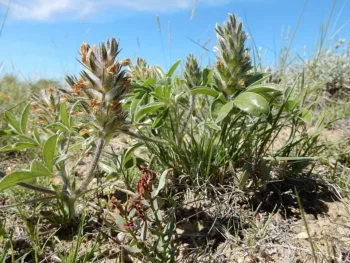
Large Indian Breadroot: A Prairie Treasure for Your Native Garden
If you’re looking to add authentic prairie character to your landscape while supporting local wildlife, large Indian breadroot (Pediomelum esculentum) might just be the hidden gem you’ve been searching for. This unassuming perennial forb packs a punch when it comes to both ecological value and historical significance, making it a fascinating addition to any native plant enthusiast’s collection.
What Exactly Is Large Indian Breadroot?
Large Indian breadroot, also known by its scientific name Pediomelum esculentum (and formerly classified as Psoralea esculenta), is a native North American perennial that belongs to the legume family. Don’t let the forb classification fool you into thinking it’s just another weedy plant – this prairie native is a true survivor with a remarkable ability to thrive in challenging conditions.
As a perennial forb, this plant lacks significant woody tissue above ground but develops an impressive underground presence with its characteristic deep taproot. This root system is actually where the breadroot part of its common name comes from – Indigenous peoples traditionally harvested and used the starchy roots as an important food source.
Where Does It Call Home?
This prairie native has quite the impressive range, stretching across much of central North America. You’ll find large Indian breadroot growing naturally in Alberta, Manitoba, Saskatchewan, Arkansas, Colorado, Iowa, Kansas, Louisiana, Minnesota, Missouri, Montana, Nebraska, New Mexico, New York, North Dakota, Oklahoma, South Dakota, Texas, Wisconsin, and Wyoming.
- Species observed
- No observations
It’s worth noting that in Arkansas, this species has a rarity status of S2, meaning it’s considered imperiled within the state. If you’re gardening in Arkansas or other areas where populations might be declining, sourcing your plants responsibly from reputable native plant nurseries is especially important.
The Garden Appeal
While large Indian breadroot might not win any flashy flower contests, it offers a subtle beauty that prairie enthusiasts absolutely adore. The plant produces clusters of small purple to blue flowers arranged in dense, cylindrical spikes that rise above compound leaves divided into 3-5 narrow leaflets. The overall effect is delicate yet resilient – very much embodying the prairie aesthetic.
What really makes this plant shine is its role as a pollinator magnet. Those unassuming flowers are actually pollinator gold, attracting native bees, butterflies, and other beneficial insects throughout the growing season. As a member of the legume family, it also helps improve soil fertility by fixing nitrogen – a win-win for both your garden and the local ecosystem.
Perfect Garden Settings
Large Indian breadroot is tailor-made for several specific garden styles:
- Prairie and meadow gardens: This is where it truly belongs, mixing beautifully with native grasses and other prairie wildflowers
- Xeriscaping projects: Its drought tolerance makes it perfect for water-wise landscapes
- Native plant collections: Essential for anyone serious about authentic regional flora
- Restoration projects: Ideal for rehabilitating degraded prairie areas
- Naturalized areas: Great for low-maintenance zones where you want nature to take the lead
Growing Conditions and Care
Here’s where large Indian breadroot really shines – it’s remarkably low-maintenance once established. This prairie veteran is adapted to USDA hardiness zones 3-8, making it suitable for a wide range of climates.
Sun Requirements: Full sun is non-negotiable. This plant evolved in open prairie conditions and needs at least 6-8 hours of direct sunlight daily.
Soil Preferences: Well-drained soils are essential. It actually prefers lean, sandy, or clay soils over rich garden loam. The key is drainage – soggy conditions will quickly spell doom for this drought-adapted native.
Water Needs: Once established (usually after the second growing season), large Indian breadroot is remarkably drought tolerant. During establishment, provide regular water, but avoid overwatering.
Planting and Establishment Tips
Growing large Indian breadroot successfully requires understanding its unique characteristics:
- Start from seed: Direct seeding in fall is your best bet. The seeds need cold stratification over winter to germinate properly in spring.
- Be patient: This plant develops slowly above ground while establishing its extensive root system. Don’t expect dramatic first-year growth.
- Avoid transplanting: That deep taproot that makes this plant so drought-tolerant also makes it nearly impossible to transplant successfully. Choose your planting location carefully.
- Minimal fertilization: As a nitrogen-fixing legume, it actually prefers lean soils. Avoid heavy fertilization which can promote excessive foliage at the expense of flowers.
The Bottom Line
Large Indian breadroot isn’t the showiest plant you’ll ever grow, but it’s one of the most ecologically valuable. If you’re committed to supporting native wildlife, creating authentic prairie landscapes, or simply want a truly low-maintenance perennial that connects you to the natural heritage of North America, this species deserves serious consideration.
Just remember to source your plants or seeds from reputable suppliers, especially if you’re in areas where wild populations are rare. With a little patience during establishment, you’ll be rewarded with a resilient, wildlife-supporting plant that embodies the understated beauty and toughness of the North American prairie.