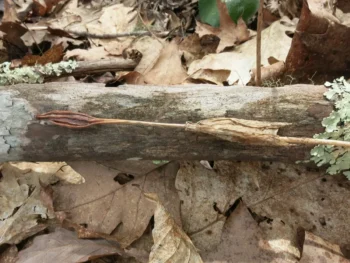
Large Whorled Pogonia: A Rare Native Orchid Worth Protecting
Meet one of North America’s most intriguing native orchids: the large whorled pogonia (Isotria verticillata). This isn’t your typical garden-center find, and honestly, that’s probably for the best. This remarkable perennial forb represents something special in the native plant world – a species that’s both widespread and wonderfully elusive.
What Makes Large Whorled Pogonia Special
The large whorled pogonia earned its name from its distinctive growth pattern. Picture a single stem topped with a whorl of five broad, oval leaves arranged like nature’s own dinner plate. From the center of this leafy crown emerges one to two unusual flowers with purple-tinted sepals and greenish petals. It’s architectural, it’s weird, and it’s absolutely captivating when you’re lucky enough to spot one in the wild.
This native orchid typically reaches 8-16 inches tall and blooms from late May through July, depending on your location. The flowers might not win any beauty contests compared to showy garden orchids, but their subtle elegance and rarity make them true treasures for those in the know.
Where You’ll Find This Native Beauty
Large whorled pogonia has an impressive native range stretching across eastern North America. You can find it from Ontario, Canada, south to Florida and west to Texas and Oklahoma. It grows naturally in states including Alabama, Arkansas, Connecticut, Delaware, Florida, Georgia, Illinois, Indiana, Kentucky, Louisiana, Maine, Maryland, Massachusetts, Michigan, Mississippi, Missouri, New Hampshire, New Jersey, New York, North Carolina, Ohio, Oklahoma, Pennsylvania, Rhode Island, South Carolina, Tennessee, Texas, Vermont, Virginia, and West Virginia.
- Species observed
- No observations
The Reality Check: Why You Probably Shouldn’t Try to Grow It
Here’s where we need to have an honest conversation. While large whorled pogonia might sound like an amazing addition to your shade garden, it’s classified as rare in several states (S2 status in Alabama, for example). More importantly, this orchid has very specific growing requirements that make it nearly impossible to cultivate successfully.
Large whorled pogonia depends on complex relationships with soil fungi (mycorrhizae) that are incredibly difficult to replicate in garden settings. Even experienced orchid growers often fail with native terrestrial orchids like this one. The plant typically grows in acidic, well-drained soils in partial to full shade, and its wetland status varies by region – it can handle both wetland and upland conditions depending on local climate.
Hardy Across Many Zones
If you could grow it (and that’s a big if), large whorled pogonia is remarkably cold-hardy, thriving in USDA zones 3-9. This wide tolerance range explains its extensive geographic distribution across diverse climates.
Conservation Over Cultivation
Instead of attempting to grow large whorled pogonia, consider these alternatives:
- Appreciate it in its natural habitat through nature photography or botanical walks
- Support conservation organizations working to protect native orchid habitats
- Choose easier native alternatives like wild ginger, mayapple, or trilliums for your shade garden
- If you absolutely must try growing it, only purchase from reputable sources that propagate rather than wild-collect
Pollinator and Wildlife Benefits
In the wild, large whorled pogonia attracts specialized pollinators including small native bees and flies. While we don’t have extensive data on all its wildlife interactions, native orchids generally play important ecological roles in their forest communities.
The Bottom Line
Large whorled pogonia is one of those plants that’s best admired from a respectful distance. Its rarity status and extremely challenging cultivation requirements make it unsuitable for most gardens. Instead, let’s celebrate this unique native orchid by protecting the wild spaces where it naturally thrives and choosing more garden-friendly native alternatives for our landscapes.
Sometimes the best way to love a plant is to leave it where it belongs – wild and wonderful in its natural home.