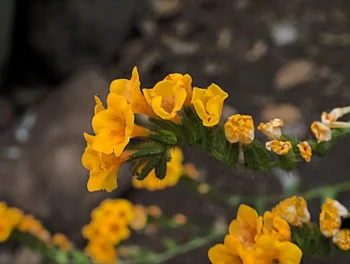
Largeflowered Fiddleneck: A Rare California Treasure Worth Protecting
If you’re passionate about California native plants and conservation, you may have heard whispers about largeflowered fiddleneck (Amsinckia grandiflora). This isn’t your typical garden center find – it’s one of California’s most critically endangered wildflowers, making it both fascinating and incredibly important to protect.
What Makes Largeflowered Fiddleneck Special?
Largeflowered fiddleneck is a native California annual that belongs to the borage family. As a forb (that’s botanist-speak for a soft-stemmed, non-woody flowering plant), it completes its entire life cycle in a single growing season. What sets this plant apart isn’t just its rarity – it’s also quite the looker with its bright yellow, funnel-shaped flowers arranged in distinctive coiled clusters that gradually unfurl as they bloom.
The whole plant has a bristly, almost fuzzy texture thanks to its hispid (stiff, hairy) stems and leaves. While it might not win any soft and cuddly plant contests, this rough exterior serves an important purpose in its natural habitat.
Where Does It Call Home?
This rare beauty is endemic to California, meaning it exists nowhere else on Earth. Originally, largeflowered fiddleneck was found in the Central Valley and surrounding areas, but habitat loss has dramatically reduced its range to just a handful of locations.
- Species observed
- No observations
A Conservation Crisis
Here’s where things get serious: Amsinckia grandiflora has a Global Conservation Status of S1, which means it’s critically imperiled. In the United States, it’s listed as Endangered. We’re talking about typically 5 or fewer known occurrences and fewer than 1,000 remaining individuals in the wild.
This isn’t a plant you can casually pick up at the nursery or collect seeds from in the wild. If you’re interested in growing largeflowered fiddleneck, you must work only with responsibly sourced material from legitimate conservation programs or botanical institutions.
Growing Conditions and Care
If you’re fortunate enough to participate in a legitimate conservation effort involving this species, here’s what largeflowered fiddleneck needs to thrive:
- Climate: USDA zones 9-11, preferring California’s Mediterranean climate
- Sunlight: Full sun exposure
- Soil: Well-draining soils; avoid heavy clay or constantly moist conditions
- Water: Minimal irrigation after establishment; this plant is adapted to dry conditions
- Planting: Direct seeding works best, as annuals often don’t transplant well
Garden Role and Design Considerations
Given its endangered status, largeflowered fiddleneck isn’t suitable for typical home gardens. However, it could play a valuable role in:
- Specialized conservation gardens at botanical institutions
- Research and seed increase programs
- Educational displays about endangered California flora
- Habitat restoration projects (with proper permits and oversight)
Pollinator and Wildlife Benefits
Like many members of the borage family, largeflowered fiddleneck likely attracts native bees and other small pollinators with its bright yellow flowers. However, due to its extreme rarity, its current ecological role is unfortunately quite limited compared to what it once was.
What Can You Do?
While you probably can’t grow largeflowered fiddleneck in your backyard, you can still support California’s native plant heritage:
- Support organizations working on endangered plant conservation
- Plant other native California wildflowers that provide similar benefits
- Learn about habitat preservation efforts in your area
- Spread awareness about endangered native plants
Consider growing related but more common California natives like other Amsinckia species or native wildflowers that support pollinators and represent the incredible diversity of California’s flora.
The Bottom Line
Largeflowered fiddleneck represents both the beauty and fragility of California’s native plant communities. While most of us won’t have the opportunity to grow this rare treasure, understanding and appreciating species like this reminds us why protecting native habitats and supporting conservation efforts matters so much. Every rare plant saved is a victory for biodiversity and a gift to future generations of nature lovers.