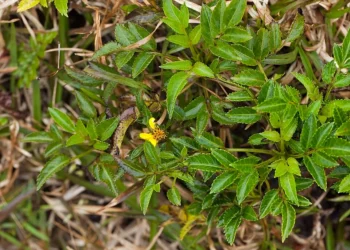
Largefruit Beggarticks: A Rare Hawaiian Native Worth Protecting
If you’re lucky enough to garden in Hawaii, you might want to get acquainted with largefruit beggarticks (Bidens macrocarpa), a charming native shrub that’s as rare as it is beautiful. This little-known Hawaiian endemic deserves a spot in your native plant garden, but there’s something important you need to know first.
A True Hawaiian Original
Largefruit beggarticks is exclusively native to the Hawaiian Islands, making it a genuine local treasure. This perennial shrub grows naturally in Hawaii’s dry and mesic forests, where it has evolved over thousands of years to thrive in the unique island conditions.
Currently, this species is found only in Hawaii, where it plays an important role in native ecosystems.
- Species observed
- No observations
Important Conservation Note
Here’s where things get serious: largefruit beggarticks has a Global Conservation Status of S2S3, indicating that this plant is rare and potentially vulnerable. If you’re considering adding this beauty to your garden, please make sure you source it responsibly from reputable native plant nurseries or conservation organizations. Never collect from wild populations!
What Does It Look Like?
Don’t let the name fool you – this beggarticks is actually quite lovely! Largefruit beggarticks is a low-growing shrub that typically stays under 1.5 feet tall, though it can occasionally reach up to 3 feet at maturity. Its compact, spreading form makes it an excellent choice for:
- Native ground cover
- Erosion control on slopes
- Restoration projects
- Low-maintenance landscaping
The plant produces small, cheerful yellow daisy-like flowers that add a pop of color to the landscape while providing important nectar for native Hawaiian pollinators.
Where and How to Grow It
If you’re gardening in USDA hardiness zones 10-11 (which covers most of Hawaii), largefruit beggarticks might be perfect for your native garden. This hardy little shrub is surprisingly adaptable and drought-tolerant once established.
Preferred Growing Conditions
- Sunlight: Full sun to partial shade
- Soil: Well-draining soils (it’s quite tolerant of different soil types)
- Water: Drought tolerant once established, but appreciates occasional watering during dry spells
- Wetland status: Facultative upland – usually found in non-wetland areas but can tolerate some moisture
Planting and Care Tips
The good news is that largefruit beggarticks is relatively low-maintenance once you get it established:
- Plant in well-draining soil to prevent root rot
- Water regularly during the first growing season to help establishment
- Once established, reduce watering – this plant is quite drought tolerant
- Occasional light pruning can help maintain its compact shape
- Propagation is typically done from seed
Why Plant Largefruit Beggarticks?
Beyond its conservation value, this native shrub offers several benefits for Hawaiian gardeners:
- Low maintenance: Perfect for busy gardeners or water-wise landscaping
- Pollinator support: Provides nectar for native Hawaiian bees and other pollinators
- Erosion control: Its spreading habit helps stabilize soil
- Cultural significance: Supports native Hawaiian plant communities
- Climate adapted: Already perfectly suited to local conditions
A Plant Worth Preserving
Largefruit beggarticks might not be the showiest plant in your garden, but it represents something precious – Hawaii’s unique natural heritage. By growing this rare native species responsibly, you’re not just adding an interesting plant to your landscape; you’re participating in conservation efforts and helping preserve Hawaii’s botanical legacy for future generations.
Remember, always source your plants from reputable native plant suppliers, and never collect from wild populations. With proper care and responsible sourcing, largefruit beggarticks can be a meaningful addition to any Hawaiian native plant garden.