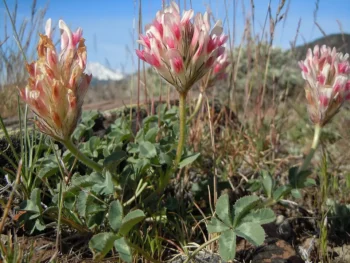
Largehead Clover: A Native Gem for Water-Wise Western Gardens
If you’re looking for a low-maintenance native plant that delivers both beauty and ecological benefits, meet largehead clover (Trifolium macrocephalum). This charming western native might just be the perfect addition to your drought-tolerant garden – and it’s a lot more interesting than your typical lawn clover!
What Is Largehead Clover?
Largehead clover is a perennial forb – basically a non-woody flowering plant that comes back year after year. As its name suggests, this plant produces notably large, showy purple flower heads that are quite the showstoppers compared to the tiny white flowers of common lawn clover. Growing up to 2 feet tall, this native beauty spreads along the ground in a decumbent fashion, creating attractive patches of green foliage topped with vibrant blooms.
This plant is a rapid grower with a relatively short lifespan, making it perfect for quickly filling in spaces while other slower-growing natives get established. Plus, like other members of the legume family, largehead clover has a superpower – it fixes nitrogen in the soil, actually improving growing conditions for neighboring plants!
Where Does Largehead Clover Grow Naturally?
Largehead clover is native to the western United States, calling California, Idaho, Nevada, Oregon, and Washington home. It’s perfectly adapted to the challenging conditions of the American West, from coastal areas to mountain valleys.
- Species observed
- No observations
Why Plant Largehead Clover in Your Garden?
There are several compelling reasons to consider this native charmer:
- Water-wise: With medium drought tolerance and low moisture requirements, it’s perfect for xeriscaping
- Pollinator magnet: Those conspicuous purple flowers bloom from mid-spring through summer, providing nectar for bees, butterflies, and other beneficial insects
- Soil improver: Medium nitrogen fixation capability means it’s actually helping your soil
- Low maintenance: Requires minimal care once established and has low fertility requirements
- Native habitat support: Supports local ecosystems by providing food and shelter for native wildlife
Where Does Largehead Clover Fit in Your Landscape?
This versatile native works beautifully in several garden settings:
- Wildflower meadows: Perfect for naturalized areas where you want a casual, prairie-like feel
- Native plant gardens: An excellent choice for dedicated native landscapes
- Water-wise gardens: Ideal for drought-tolerant plantings and xeriscapes
- Restoration projects: Great for restoring degraded areas or creating habitat
- Ground cover: Use as a living mulch or to fill in between larger plants
Growing Conditions and Care
Largehead clover is refreshingly easy-going when it comes to growing conditions:
Soil: Thrives in coarse to medium-textured soils but struggles in heavy clay. Prefers slightly acidic to neutral soil (pH 6.2-7.1) and tolerates calcium carbonate well.
Water: Low water needs once established, but can handle occasional wet conditions. Usually found in non-wetland areas but adaptable.
Sun: Intermediate shade tolerance means it can handle partial shade, though full sun is preferred for best flowering.
Climate: Needs at least 80 frost-free days and annual precipitation between 10-20 inches. Hardy in USDA zones 4-8.
Planting and Propagation Tips
Growing largehead clover from seed is your best bet, as it’s not commonly available in nurseries:
- Seeding: With 150,000 seeds per pound, a little goes a long way! Seeds have high abundance and moderate spread rate
- Timing: Plant seeds in fall or early spring for best results
- Germination: No cold stratification required, and seedlings show medium vigor
- Establishment: Plants develop a single crown growth form with roots reaching at least 6 inches deep
- Maintenance: Very minimal – just ensure good drainage and avoid overwatering
A Few Things to Keep in Mind
While largehead clover is generally wonderful, here are some considerations:
- It’s not currently available from commercial sources, so you’ll need to source seeds from specialty native plant suppliers
- The short lifespan means you may need to reseed every few years
- It doesn’t resprout after cutting, so avoid areas that need regular mowing
- Fire tolerance is only medium, so consider placement in fire-prone areas
The Bottom Line
Largehead clover is a fantastic choice for western gardeners who want to support native ecosystems while creating beautiful, low-maintenance landscapes. Its showy purple flowers, nitrogen-fixing abilities, and drought tolerance make it a triple threat in the best possible way. While it may take some effort to source seeds, the payoff in pollinator activity and easy-care beauty makes it well worth the hunt!
Ready to add some native flair to your garden? Largehead clover might just be the perfect place to start your journey into western native gardening.