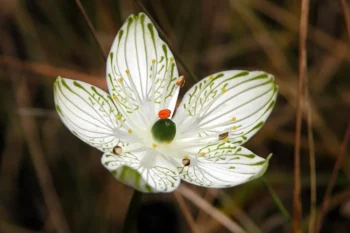
Largeleaf Grass of Parnassus: A Rare Wetland Gem Worth Protecting
Meet one of the Southeast’s most enchanting yet elusive wetland wildflowers: the largeleaf grass of Parnassus (Parnassia grandifolia). Don’t let the grass in its name fool you – this delicate beauty is actually a flowering perennial forb that calls our region’s bogs and wet prairies home. If you’re lucky enough to spot one in the wild, you’re witnessing something truly special.
What Makes This Plant Special
The largeleaf grass of Parnassus is a native treasure found across 15 southeastern states, including Alabama, Arkansas, Florida, Georgia, Kentucky, Louisiana, Mississippi, Missouri, North Carolina, Oklahoma, South Carolina, Tennessee, Texas, Virginia, and West Virginia. As a perennial forb, it lacks woody stems but returns year after year from its rootstock, producing distinctive white flowers with delicate green veining that seem to glow against wetland backdrops.
- Species observed
- No observations
A Plant That Needs Our Help
Important Conservation Note: Before we dive into growing tips, it’s crucial to understand that largeleaf grass of Parnassus is considered globally vulnerable with a conservation status of S3. In Alabama, it’s extremely rare with an S1 status, meaning it’s at serious risk of disappearing from the state entirely. This rarity makes it both precious and challenging for home gardeners.
The Wetland Specialist
This plant is what we call an obligate wetland species across all regions where it grows – meaning it almost always occurs in wetlands and requires consistently moist to saturated soils. You won’t find this one thriving in your average flower bed! Its natural habitats include:
- Bogs and fens
- Wet prairies
- Seepage areas
- Streamside wetlands
Garden Potential and Challenges
While the largeleaf grass of Parnassus would be a stunning addition to specialized wetland gardens, rain gardens, or bog gardens, it comes with significant challenges. This plant has very specific growing requirements that are difficult to replicate outside of natural wetland conditions.
The ideal growing conditions include:
- Consistently moist to wet, even saturated soils
- Full sun to partial shade exposure
- Cool, humid conditions
- USDA hardiness zones 6-9
Pollinator and Wildlife Value
When it does bloom, this native plant provides nectar for specialized pollinators including flies and small native bees. Its flowers are perfectly adapted to attract these smaller pollinators, making it an important part of wetland ecosystems.
Should You Grow It?
Here’s where we need to be honest: unless you have a dedicated bog garden or wetland restoration project, growing largeleaf grass of Parnassus successfully is extremely challenging. The plant’s strict moisture requirements and rare status make it unsuitable for most home gardens.
If you’re determined to try: Only source plants or seeds from reputable native plant nurseries that can verify the material was ethically and sustainably obtained – never collect from wild populations. Consider this plant only if you can provide the specialized wetland conditions it absolutely requires.
Better Alternatives for Most Gardens
For gardeners inspired by this plant’s beauty but lacking appropriate wetland conditions, consider these native alternatives that offer similar aesthetic appeal with less demanding requirements:
- Wild bergamot for white flower appeal
- Cardinal flower for wetland garden color
- Blue flag iris for wet soil tolerance
- Swamp milkweed for pollinator benefits
The Bottom Line
The largeleaf grass of Parnassus represents the fascinating specialization of our native flora, perfectly adapted to specific wetland niches. While it may not be the right choice for most home gardens, understanding and appreciating plants like this helps us become better stewards of our natural heritage. Sometimes the best way to grow a rare plant is to protect the wild spaces where it naturally thrives.
If you encounter this rare beauty in the wild, take a moment to appreciate its delicate flowers and important role in wetland ecosystems – but always remember to look and photograph rather than collect.