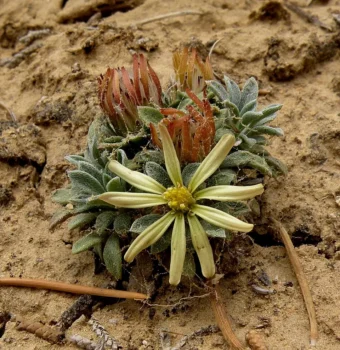
Last Chance Townsend Daisy: A Rare Utah Native Worth Protecting
If you’ve stumbled across the Last Chance Townsend daisy (Townsendia aprica) in your research, you’ve discovered one of Utah’s botanical treasures—and one of its most vulnerable. This little-known native perennial is as rare as it is special, making it a fascinating but challenging addition to any conservation-minded gardener’s wishlist.
What Makes This Daisy So Special?
The Last Chance Townsend daisy is a native perennial forb that calls Utah home. As a member of the Townsendia genus, it’s related to other charming western daisies, but this particular species has carved out its own unique niche in the landscape. The plant grows as a herbaceous perennial without significant woody tissue, staying relatively low to the ground like many of its mountain and desert relatives.
A Plant on the Edge: Understanding Its Rarity
Here’s the important part every gardener needs to know: This plant is incredibly rare and considered threatened. With a conservation status of S2, it’s classified as Imperiled due to extreme rarity, with typically only 6 to 20 occurrences remaining in the wild. In the United States, it holds an official Threatened status, which means it needs our protection, not our harvesting.
Where Does It Grow Naturally?
The Last Chance Townsend daisy is endemic to Utah, where it has adapted to specific local conditions over thousands of years. This limited geographic distribution is part of what makes it so vulnerable—there simply aren’t many places where it can thrive naturally.
- Species observed
- No observations
Should You Grow This Rare Beauty?
While the conservation-minded gardener in you might want to help protect this species through cultivation, proceed with extreme caution. Given its threatened status, here are the key considerations:
- Only use responsibly sourced material: Never collect seeds or plants from wild populations
- Work with conservation organizations: If you’re interested in growing this species, connect with Utah botanical gardens or conservation groups
- Consider alternatives: Other Townsendia species that are more common might satisfy your desire for native western daisies
- Support habitat preservation: Sometimes the best way to help a rare plant is to support the protection of its natural habitat
Growing Conditions (Best Guesses)
While specific horticultural information for Townsendia aprica is limited due to its rarity, we can make some educated guesses based on its classification and Utah origins:
- Likely prefers well-draining soils typical of western landscapes
- Probably adapted to Utah’s climate extremes and elevation ranges
- As a native perennial forb, it’s likely drought-tolerant once established
- May require specific soil conditions that mimic its natural habitat
The Bottom Line for Gardeners
The Last Chance Townsend daisy represents everything we love about native plants—uniqueness, adaptation, and natural beauty—while also reminding us of our responsibility as gardeners to protect rather than exploit. If you’re drawn to this rare species, channel that enthusiasm into supporting conservation efforts or growing more common native alternatives that can provide similar ecological benefits without putting additional pressure on threatened populations.
Sometimes the most loving thing we can do for a plant is to admire it from afar and work to ensure it has a future in its natural home. The Last Chance Townsend daisy truly lives up to its dramatic common name—it may be getting its last chance to survive in the wild, and that’s something worth protecting.