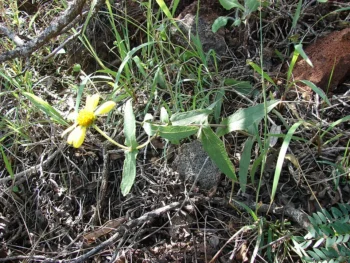
Lavaflow Nehe: A Rare Hawaiian Native Worth Preserving
Meet the lavaflow nehe (Lipochaeta heterophylla), a charming little Hawaiian native that’s as tough as the volcanic landscapes it calls home. This unassuming perennial herb might not win any beauty contests at first glance, but it’s got character, resilience, and a conservation story that makes it truly special.
What Makes Lavaflow Nehe Special?
Lavaflow nehe is a low-growing forb that belongs exclusively to the Hawaiian Islands. True to its common name, this hardy little plant has adapted to thrive in some of Hawaii’s most challenging environments – think rocky lava flows, coastal areas, and other spots where most plants would throw in the towel.
The plant produces small, cheerful yellow daisy-like flowers that add splashes of sunshine to otherwise stark volcanic landscapes. Its succulent-like leaves help it store water during dry periods, making it a master of drought survival.
Where You’ll Find It (Or Won’t)
This endemic Hawaiian species is found naturally only in Hawaii, where it grows in rocky, well-draining soils across various islands. However, here’s where things get serious – lavaflow nehe has a Global Conservation Status of S1S2, which means it’s considered rare and potentially vulnerable.
- Species observed
- No observations
The Conservation Reality Check
Before you get excited about adding this unique native to your garden, there’s something important you need to know. Lavaflow nehe’s rarity status means it’s not something you can just pick up at your local nursery. If you’re fortunate enough to find responsibly sourced material from conservation programs or specialized native plant nurseries, then you might consider growing it – but only then.
This isn’t just about following rules; it’s about being a responsible gardener who helps preserve Hawaii’s unique botanical heritage rather than contributing to its decline.
Growing Lavaflow Nehe: For the Fortunate Few
If you do manage to source this plant responsibly, here’s what you need to know about keeping it happy:
Perfect Growing Conditions
- Sunlight: Full sun is essential – this plant evolved on exposed lava flows
- Soil: Well-draining, rocky, or sandy soils that mimic its natural habitat
- Water: Minimal watering once established – think drought-loving not thirsty
- Climate: USDA zones 10-12, though it’s really designed for tropical and subtropical conditions
Planting and Care Tips
- Plant in spring when temperatures are warming
- Ensure excellent drainage – soggy soil is this plant’s kryptonite
- Water sparingly during establishment, then rely mainly on natural rainfall
- Avoid fertilizing – rich soils can actually harm this adapted-to-poor-soils species
- Allow it to spread naturally as ground cover
Garden Role and Design Ideas
In the right setting, lavaflow nehe makes an excellent ground cover for rock gardens, xeriphytic landscapes, or authentic Hawaiian native plant gardens. It’s perfect for areas where you want low-maintenance coverage that can handle heat and drought.
Consider pairing it with other native Hawaiian plants in a conservation-focused landscape design. It works beautifully as part of native habitat restoration projects or educational gardens that showcase Hawaii’s unique flora.
Wildlife and Pollinator Benefits
While specific wildlife data for this species is limited, its yellow flowers likely attract native Hawaiian insects and other pollinators. Every native plant plays a role in supporting local ecosystems, even if that role isn’t fully documented yet.
The Bottom Line
Lavaflow nehe is a fascinating piece of Hawaii’s botanical puzzle – tough, adapted, and irreplaceable. While most gardeners won’t have the opportunity to grow this rare native, those involved in conservation efforts or lucky enough to find responsibly sourced material have the chance to help preserve a unique piece of Hawaiian natural heritage.
Remember: if you can’t source it responsibly, admire it in its natural habitat instead. Sometimes the best way to love a plant is to let it be wild and free in the places it calls home.