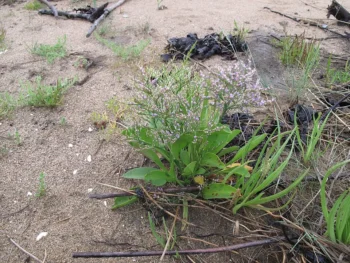
Lavender Thrift: A Coastal Native That Thrives Where Others Fear to Tread
If you’ve ever walked along a salt marsh or coastal wetland and noticed delicate purple flowers swaying on tall stems above the grasses, you’ve likely encountered lavender thrift (Limonium carolinianum). This hardy native perennial has mastered the art of thriving in some of the most challenging growing conditions nature can dish out.
Meet This Resilient Native
Lavender thrift goes by several names – you might also hear it called American thrift, seaside thrift, canker root, or marsh root. This perennial forb (a non-woody flowering plant) has been quietly beautifying North America’s coastlines and wetlands for centuries. As a true native species, it naturally occurs across an impressive range from maritime Canada down through the eastern United States to the Gulf Coast states.
Where You’ll Find Lavender Thrift Growing Wild
This adaptable native calls home a vast territory stretching from the Canadian maritimes (New Brunswick, Nova Scotia, Prince Edward Island, Quebec, Labrador, and Newfoundland) south through most of the eastern United States. You’ll find it growing naturally in Alabama, Connecticut, Delaware, Florida, Georgia, Louisiana, Maine, Maryland, Massachusetts, Mississippi, New Hampshire, New Jersey, New York, North Carolina, Rhode Island, South Carolina, Texas, and Virginia.
- Species observed
- No observations
What Makes Lavender Thrift Special
Don’t let its delicate appearance fool you – this plant is tough as nails. Lavender thrift has earned its place in the harshest environments by developing some impressive survival skills:
- Exceptional salt tolerance that allows it to thrive in coastal conditions
- High moisture requirements that make it perfect for wetland gardens
- Moderate growth rate reaching about 2 feet tall
- Attractive purple flowers that bloom in summer
- Erect growth form with a single crown structure
Garden Appeal and Design Role
Lavender thrift brings a naturalistic charm to gardens with its clusters of small purple flowers held high above basal rosettes of green, medium-textured foliage. The flowers are definitely the star of the show – they’re conspicuous and add a lovely splash of color during the summer blooming period. While the blue fruit that follows isn’t particularly showy, the overall plant form creates excellent texture and movement in the landscape.
This native works beautifully in:
- Coastal and seaside gardens
- Rain gardens and bioswales
- Wetland restoration projects
- Native plant gardens
- Natural and prairie-style landscapes
Perfect Growing Conditions
Here’s where lavender thrift gets particular – it’s classified as an obligate wetland plant, meaning it almost always occurs in wetlands across all regions where it grows. This plant has high moisture requirements and low drought tolerance, so don’t expect it to survive in dry conditions.
Lavender thrift thrives in:
- USDA Hardiness Zones: 3-9
- Soil: Adapts to coarse, medium, or fine-textured soils
- pH: 6.0 to 8.5
- Moisture: Consistently moist to wet conditions
- Sun: Full sun (shade intolerant)
- Salt tolerance: High – perfect for coastal conditions
- Temperature: Can handle temperatures down to -8°F
Planting and Care Tips
Growing lavender thrift successfully is all about mimicking its natural wetland habitat:
- Location: Choose a spot that stays consistently moist or even seasonally flooded
- Soil prep: Ensure good drainage despite high moisture – standing water is fine, but not stagnant conditions
- Planting: Best established from bare root plants or seed (though commercial availability is limited)
- Spacing: Plant 2,728 to 10,912 plants per acre for naturalized areas
- Fertilization: Low fertility requirements – this plant doesn’t need rich soils
- Maintenance: Minimal care needed once established in proper conditions
Wildlife and Pollinator Benefits
Like many native plants, lavender thrift supports local ecosystems. Its summer flowers provide nectar for butterflies, bees, and other pollinators visiting coastal and wetland areas. The seeds, while produced in relatively low abundance, contribute to the food web for various wildlife species.
Propagation Notes
If you’re interested in growing lavender thrift from seed, you’ll find about 600,000 seeds per pound. Seeds can be collected from summer through fall, though they don’t persist long once they ripen. The plant spreads at a moderate rate by seed but doesn’t spread vegetatively, making it well-behaved in garden settings.
Is Lavender Thrift Right for Your Garden?
Lavender thrift is an excellent choice if you have consistently moist to wet conditions and want to support native wildlife while adding natural beauty to your landscape. It’s particularly valuable for coastal gardeners dealing with salt spray and challenging conditions where many other plants struggle.
However, this isn’t the plant for you if you have dry conditions, significant shade, or are looking for a low-maintenance perennial for typical garden beds. Its obligate wetland status means it really needs those moist conditions to thrive.
For gardeners blessed with wetland conditions or coastal properties, lavender thrift offers the perfect combination of native authenticity, ecological value, and understated beauty that makes every garden a little wilder and more wonderful.