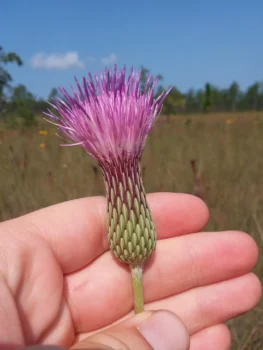
Le Conte’s Thistle: A Rare Southeastern Native Worth Protecting
Meet Le Conte’s thistle (Cirsium lecontei), a fascinating native wildflower that’s become something of a botanical treasure in the southeastern United States. This perennial forb might not be the showiest plant in your garden, but it packs a punch when it comes to supporting local wildlife and preserving our natural heritage.
What Makes Le Conte’s Thistle Special?
Le Conte’s thistle is a true southeastern native, calling the coastal plains of seven states home. You’ll find this resilient perennial naturally growing in Alabama, Florida, Georgia, Louisiana, Mississippi, North Carolina, and South Carolina. It’s perfectly adapted to the region’s unique wetland environments, making it a valuable addition to any native plant enthusiast’s collection.
- Species observed
- No observations
As a perennial forb, this plant lacks significant woody tissue but returns year after year from its root system. The purple-pink thistle flowers bloom in late spring to early summer, creating a striking display that pollinators absolutely adore.
A Plant That Needs Our Help
Here’s where things get serious: Le Conte’s thistle is considered rare. With a global conservation status of S2S3 and an S1 status in Alabama (meaning it’s critically imperiled), this isn’t your everyday garden center find. If you’re interested in growing this species, it’s crucial to source plants or seeds responsibly from reputable native plant nurseries that don’t collect from wild populations.
Wildlife Benefits That Pack a Punch
Don’t let its rarity fool you into thinking this plant isn’t worth the effort. Le Conte’s thistle is a wildlife superstar:
- Provides 5-10% of the diet for various terrestrial bird species
- Serves as an excellent nectar source for butterflies, bees, and other pollinators
- Seeds feed finches and other seed-eating birds
- Supports the complete life cycle of several native insects
Growing Conditions and Care
Le Conte’s thistle thrives in conditions that mimic its natural wetland habitat. Here’s what this moisture-loving native needs to flourish:
- Moisture: Prefers consistently moist to wet soils – it’s classified as a facultative wetland plant
- Sunlight: Full sun to partial shade
- Soil: Tolerates a range of soil types but prefers organic, moisture-retentive soils
- Hardiness: Suitable for USDA zones 8-10
- Flooding tolerance: Can handle periodic flooding, making it perfect for rain gardens
Perfect Garden Settings
This isn’t a plant for formal flower beds, but it shines in the right setting:
- Native plant gardens focusing on southeastern species
- Wetland restoration projects
- Rain gardens and bioswales
- Wildlife gardens designed to support local fauna
- Naturalized areas that mimic coastal plain habitats
Planting and Care Tips
Growing Le Conte’s thistle successfully is all about mimicking its natural environment:
- Plant in spring after the last frost
- Ensure consistent soil moisture – never let it completely dry out
- Mulch around plants to retain moisture
- Allow plants to self-seed to establish a sustainable population
- Minimal fertilization needed – it’s adapted to natural soil conditions
- Cut back spent flower heads if you want to prevent self-seeding
A Conservation-Minded Choice
Choosing to grow Le Conte’s thistle is more than just adding another plant to your garden – it’s participating in conservation. By cultivating this rare native in appropriate settings, you’re helping preserve genetic diversity and providing habitat for the wildlife that depends on it.
Just remember: always source your plants responsibly. Look for nurseries that propagate their own plants rather than collecting from wild populations. Your garden can become a refuge for this remarkable southeastern native while contributing to its long-term survival.
In a world where common plants dominate our landscapes, growing something as special as Le Conte’s thistle connects us to the unique natural heritage of the Southeast. It’s a small but meaningful way to support biodiversity right in your own backyard.