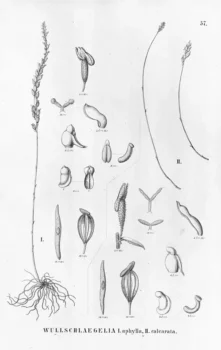
The Leafless Orchid: A Mysterious Puerto Rican Native You Can’t (and Shouldn’t) Grow
Meet one of nature’s most enigmatic plants: the leafless orchid (Wullschlaegelia aphylla). If you’re expecting a showy garden specimen, you might want to sit down for this one. This peculiar little orchid is about as far from your typical garden center find as a plant can get – and that’s exactly what makes it so fascinating.
What Makes the Leafless Orchid So Special?
True to its name, the leafless orchid has completely given up on photosynthesis – the whole making food from sunlight thing that most plants do. Instead, this clever little survivor has struck up a partnership with fungi in the forest floor, essentially getting its meals delivered through an underground network. It’s like the ultimate plant foodie, but instead of ordering takeout, it’s tapped into nature’s own delivery service.
This perennial herb belongs to the orchid family, but don’t expect the glamorous blooms you’d see at a flower shop. The leafless orchid is small, inconspicuous, and frankly, pretty easy to miss if you’re not looking for it.
Where Does It Call Home?
The leafless orchid is a proud native of Puerto Rico, where it makes its home in the island’s lush, wet forests. This plant is what we call an obligate wetland species, meaning it almost always occurs in very moist environments – think cloud forests and other perpetually damp, shaded areas.
- Species observed
- No observations
Why You Can’t (and Shouldn’t) Grow This One
Here’s where we need to have an honest conversation. The leafless orchid is not a plant for your garden, and here’s why:
- It’s extremely rare: This orchid has a very limited distribution and is considered endangered
- Impossible cultivation requirements: It depends on specific mycorrhizal fungi that can’t be replicated in garden settings
- No leaves, no photosynthesis: Without its forest fungal partners, it simply cannot survive
- Specialized habitat needs: It requires the exact conditions of Puerto Rico’s wet montane forests
Even if you could somehow obtain this plant (which you shouldn’t attempt), it would be like trying to keep a deep-sea fish in your backyard pool – the specialized requirements just can’t be met outside its natural habitat.
Its Role in Nature’s Garden
While you can’t grow the leafless orchid in your landscape, it plays a crucial role in Puerto Rico’s forest ecosystems. As part of the complex web of relationships in wet forests, it contributes to the biodiversity that makes these environments so resilient and fascinating.
Better Native Alternatives for Your Garden
If you’re gardening in Puerto Rico or similar tropical zones and want to support native orchids, consider looking for:
- More common native epiphytic orchids that can be ethically propagated
- Native plants that support the forest ecosystems where rare orchids like this one thrive
- Wetland plants native to your specific region that can create habitat for local wildlife
The Takeaway
Sometimes the most important thing we can do as gardeners is to appreciate plants from afar and focus our growing efforts on species that can actually thrive in cultivation. The leafless orchid is a reminder that not every plant is meant for our gardens – and that’s perfectly okay. Its job is to be a mysterious, fascinating part of Puerto Rico’s wild places, and our job is to protect those wild places so it can keep doing what it does best.
Instead of trying to bring every rare plant into cultivation, let’s celebrate the ones that remain wild and focus our gardening energy on native species that can realistically thrive in our care while still supporting local ecosystems.