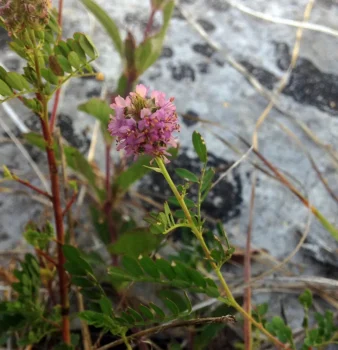
Leafy Prairie Clover: A Rare Native Gem Worth Protecting
If you’re passionate about native plants and conservation, leafy prairie clover (Dalea foliosa) might just capture your heart—though finding it might prove quite the challenge. This extraordinary little prairie plant has a story that’s equal parts fascinating and heartbreaking, making it one of the most sought-after natives for conservation-minded gardeners.
What Makes Leafy Prairie Clover Special?
Leafy prairie clover is a perennial forb that once danced across prairie landscapes throughout the Midwest and Southeast. Unlike its woody cousins, this charming plant lacks significant woody tissue and produces beautiful cylindrical flower spikes packed with tiny white to pale pink blooms. The delicate compound leaves give the plant its leafy common name, creating an almost ferny texture that adds subtle elegance to any planting.
You might also encounter this plant under its former scientific name, Petalostemon foliosus, in older gardening references or seed catalogs.
A Plant in Peril
Here’s where the story gets serious: leafy prairie clover is federally listed as Endangered and extremely rare throughout its range. In Alabama, it holds an S1 status, meaning it’s critically imperiled with very few known populations. This isn’t just another uncommon native—it’s a plant teetering on the edge of extinction.
Originally native to Alabama, Illinois, Tennessee, and Wisconsin, leafy prairie clover has lost much of its natural habitat to development and agricultural conversion. Today, finding this plant in the wild is like discovering buried treasure.
- Species observed
- No observations
Should You Plant Leafy Prairie Clover?
The short answer? Absolutely—but with a huge caveat. Given its endangered status, you should only plant leafy prairie clover if you can source it responsibly from reputable native plant nurseries or conservation organizations. Never collect seeds or plants from wild populations, as this could push already vulnerable populations closer to extinction.
If you can secure responsibly sourced plants, you’ll be participating in crucial conservation efforts while adding a truly unique native to your garden.
Where Leafy Prairie Clover Thrives
This prairie beauty is surprisingly adaptable when it comes to moisture levels, earning a Facultative wetland rating across multiple regions. This means it can handle both wetland and upland conditions, though it generally prefers:
- Full sun exposure
- Well-drained soils
- USDA hardiness zones 4-8
- Prairie-like conditions with minimal competition
Once established, leafy prairie clover is remarkably drought tolerant, making it perfect for low-maintenance native gardens and prairie restoration projects.
Garden Design Ideas
Leafy prairie clover shines in:
- Prairie restoration projects
- Native plant conservation gardens
- Pollinator-focused landscapes
- Rain gardens and bioswales
- Educational demonstration gardens
Its delicate texture and modest height make it an excellent companion for other prairie natives like wild bergamot, purple coneflower, and native grasses.
Pollinator Paradise
Like other members of the Dalea genus, leafy prairie clover is a pollinator magnet. Its dense flower spikes attract native bees, butterflies, and other beneficial insects that have co-evolved with prairie plants. By growing this species, you’re not just adding beauty to your garden—you’re providing critical habitat for pollinators that depend on native plants.
Growing Tips for Success
If you’re lucky enough to acquire leafy prairie clover, here’s how to help it thrive:
- Site selection: Choose a sunny location with excellent drainage
- Soil prep: Avoid overly rich soils; this plant prefers lean conditions
- Watering: Water regularly the first year, then let natural rainfall take over
- Maintenance: Minimal care needed; occasional cutting or controlled burns can benefit prairie plants
- Patience: Like many prairie plants, it may take time to establish but will reward you with years of beauty
A Living Legacy
Growing leafy prairie clover isn’t just about gardening—it’s about conservation. Every responsibly grown plant represents hope for this endangered species and contributes to maintaining genetic diversity for future restoration efforts. While you might not be able to find this rare beauty at your local garden center, connecting with native plant societies, botanical gardens, or conservation organizations might lead you to legitimate sources.
In a world where we’re losing native plants at an alarming rate, choosing to grow endangered species like leafy prairie clover is both a privilege and a responsibility. You’ll be joining a community of dedicated gardeners working to keep these botanical treasures alive for future generations to enjoy and study.