Leathery Grapefern: A Mysterious Native Fern Worth Knowing
If you’ve ever stumbled across a small, bronze-tinged fern with distinctly leathery fronds during a woodland walk, you might have encountered one of North America’s most intriguing native ferns: the leathery grapefern (Botrychium multifidum). This perennial fern is far from your typical garden variety plant, and there’s a good reason why you don’t see it at your local nursery.
What Makes Leathery Grapefern Special
Leathery grapefern stands out from other ferns with its unique appearance and lifecycle. Unlike the delicate, feathery fronds of many ferns, this species produces thick, leathery triangular fronds that have an almost succulent-like texture. The fronds emerge in late summer or fall, often with a distinctive bronze or copper coloring that gradually turns green.
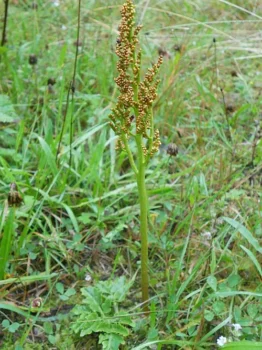
This isn’t just any ordinary fern – it’s part of a primitive group of ferns that reproduce differently from most others. Instead of the typical clusters of spores on the undersides of fronds, leathery grapefern produces a separate, grape-like cluster of sporangia (hence grapefern) on a special fertile spike.
Where You’ll Find This Native Beauty
Leathery grapefern has one of the most extensive native ranges of any North American fern. It’s truly native across most of the continent, from Alaska down to New Mexico, and from coast to coast. You can find it naturally occurring in states from California to Maine, and throughout much of Canada including Alberta, British Columbia, Manitoba, Ontario, and Quebec.
- Species observed
- No observations
A Conservation Concern
Here’s where things get serious: while leathery grapefern has a broad range, it’s actually quite rare in many locations. In New Jersey, it’s listed as Endangered with an S1 status, meaning it’s critically imperiled in the state. This rarity makes it a plant that demands our respect and protection.
If you’re lucky enough to spot one in the wild, please observe and photograph but don’t disturb it. These ferns have specific habitat requirements and complex relationships with soil fungi that make them incredibly sensitive to disturbance.
Habitat Preferences
Leathery grapefern is quite particular about where it calls home. Its wetland status varies by region – it can occur in both wetlands and non-wetlands depending on the location, but it generally prefers:
- Moist, well-draining woodland soils
- Partial to full shade
- Areas with rich organic matter
- Locations with specific mycorrhizal fungi partners
The fern thrives in USDA hardiness zones 2-8, making it quite cold-hardy but also adaptable to more moderate climates.
Should You Grow Leathery Grapefern?
This is where we need to have an honest conversation. While leathery grapefern would be a fascinating addition to any native plant collection, it’s notoriously difficult to cultivate. Here’s why:
- It requires specific soil fungi (mycorrhizae) to survive
- It has very particular moisture and soil requirements
- Commercial availability is extremely limited
- Its endangered status in some areas makes ethical sourcing crucial
If you’re determined to try growing leathery grapefern, only source it from reputable native plant nurseries that propagate their own plants rather than collecting from wild populations. Never collect this fern from the wild – it’s not only ecologically harmful but may also be illegal in areas where it’s protected.
Better Alternatives for Your Garden
If you’re drawn to the unique charm of leathery grapefern but want something more garden-friendly, consider these native alternatives:
- Christmas fern (Polystichum acrostichoides) for evergreen structure
- Lady fern (Athyrium filix-femina) for delicate texture
- Royal fern (Osmunda regalis) for dramatic height
- Sensitive fern (Onoclea sensibilis) for naturalistic groundcover
Appreciating This Woodland Gem
While leathery grapefern might not be the best choice for most home gardens, it plays an important role in natural ecosystems. As a native species with such an extensive range, it contributes to the biodiversity of woodland communities across North America.
The best way to appreciate this remarkable fern is to learn to identify it during nature walks and to support conservation efforts in your area. If you’re interested in native ferns for your garden, focus on more readily available species while keeping an eye out for this special plant in its natural habitat.
Remember, sometimes the most meaningful way to garden with native plants is to protect and appreciate them where they naturally belong – in the wild spaces that need our stewardship and care.