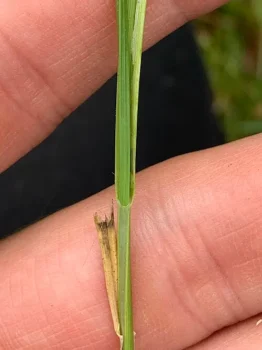
Leavenworth’s Sedge: A Quiet Champion for Shade Gardens
If you’re looking for a native groundcover that won’t hog the spotlight but will quietly do its job with grace, let me introduce you to Leavenworth’s sedge (Carex leavenworthii). This unassuming little perennial might not win any flashy flower contests, but it’s exactly the kind of reliable, low-maintenance plant that makes gardeners’ lives easier.
What Is Leavenworth’s Sedge?
Leavenworth’s sedge is a native North American perennial that belongs to the sedge family (Cyperaceae). As a graminoid, it shares the grass-like appearance of its cousins but brings its own unique character to the garden. Don’t let the sedge name fool you into thinking it’s just another boring grass – this little plant has plenty to offer the thoughtful gardener.
You might occasionally see this plant listed under its botanical synonyms, including Carex cephalophora var. angustifolia or Carex cephalophora var. leavenworthii, but rest assured – they’re all referring to the same dependable little sedge.
Where Does It Call Home?
This sedge is a true native success story, naturally occurring across a impressive range that spans from southern Canada down through much of the eastern and central United States. You’ll find it thriving in states from Alabama to Wisconsin, and from California to New York – talk about adaptable! Its extensive native range includes Alabama, Arkansas, California, Ontario, District of Columbia, Florida, Georgia, Illinois, Indiana, Iowa, Kansas, Kentucky, Louisiana, Maryland, Michigan, Mississippi, Missouri, Nebraska, New Jersey, New York, North Carolina, Ohio, Oklahoma, Pennsylvania, South Carolina, Tennessee, Texas, Virginia, West Virginia, and Wisconsin.
- Species observed
- No observations
A Note About Rarity
Before you rush out to find this plant, there’s something important to know: Leavenworth’s sedge has a special conservation status in New Jersey, where it’s listed as Highlands Listed, SU. If you’re gardening in areas where this plant is rare, please make sure to source your plants responsibly from reputable native plant nurseries rather than collecting from the wild. We want to enjoy these plants in our gardens while protecting their natural populations!
Why Choose Leavenworth’s Sedge?
Here’s where this little sedge really shines – it’s the ultimate low-maintenance companion for shade gardens and naturalized areas. While it may not have the showstopping blooms of a wildflower, its quiet beauty lies in its reliability and ecological value.
This sedge works beautifully as:
- Groundcover in woodland gardens
- Filler in native plant landscapes
- Texture contrast in shade gardens
- Natural-looking addition to rain gardens and bioswales
Growing Leavenworth’s Sedge Successfully
The beauty of this sedge lies in its easygoing nature. It thrives in USDA hardiness zones 4 through 9, making it suitable for most temperate gardens across its native range.
Ideal Growing Conditions
Leavenworth’s sedge appreciates:
- Light: Partial shade to full shade (though it can tolerate some morning sun)
- Soil: Adaptable to various soil types, from moist to moderately dry conditions
- Water: Moderate moisture, but surprisingly drought-tolerant once established
- pH: Tolerates a range of soil pH levels
Planting and Care Tips
Getting started with Leavenworth’s sedge is refreshingly straightforward:
- Planting: Spring or fall are ideal planting times. Space plants about 12-18 inches apart for groundcover use
- Watering: Water regularly the first season to establish roots, then reduce frequency as the plant becomes drought-tolerant
- Maintenance: Minimal care required! You can cut back old foliage in late winter if desired, but it’s not necessary
- Fertilizing: Skip the fertilizer – this native prefers lean soils
Wildlife and Ecological Benefits
While Leavenworth’s sedge might not be a pollinator magnet (it’s wind-pollinated, like most sedges), it still provides valuable ecosystem services. Native sedges offer habitat for beneficial insects, nesting material for birds, and help stabilize soil with their root systems. It’s one of those quiet contributors that makes the whole ecosystem work better.
Is Leavenworth’s Sedge Right for Your Garden?
This sedge is perfect for gardeners who appreciate understated beauty and want reliable, native groundcover that won’t require constant attention. It’s especially valuable if you’re creating wildlife habitat, working with challenging shade conditions, or simply want to add authentic native character to your landscape.
However, if you’re looking for showy flowers or dramatic foliage, you might want to pair this sedge with more colorful native companions rather than relying on it as a star performer.
Leavenworth’s sedge proves that sometimes the best plants are the ones that simply do their job well, year after year, without making a fuss. In a world of high-maintenance garden divas, there’s something deeply satisfying about a plant that just quietly makes your garden better.