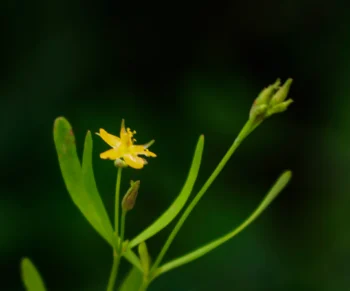
Lesser Canadian St. Johnswort: A Delicate Native for Wet Gardens
If you’re looking for a charming native plant that thrives in those tricky wet spots in your garden, meet the lesser Canadian St. Johnswort (Hypericum canadense). This petite annual might not win any showiest flower contests, but it brings understated elegance and important ecological value to naturalized landscapes and rain gardens.
Getting to Know Lesser Canadian St. Johnswort
Lesser Canadian St. Johnswort is a delicate annual forb—basically a non-woody plant that completes its life cycle in one growing season. As a member of the extensive St. Johnswort family, it shares the characteristic bright yellow, five-petaled flowers that seem to glow in summer sunlight. Don’t expect towering heights though; this little beauty stays compact and unassuming.
You might also see this plant listed under its botanical synonyms Hypericum canadense var. galiiforme or Hypericum canadense var. magninsulare, but they’re all referring to the same species.
Where Does It Call Home?
This native gem has quite an impressive range across North America. You’ll find lesser Canadian St. Johnswort growing naturally from southeastern Canada (including New Brunswick, Nova Scotia, Ontario, Prince Edward Island, Quebec, and Newfoundland) down through most of the eastern and central United States. Its range stretches from Maine to Florida and west to states like Minnesota, Iowa, and even reaches Oregon and Washington.
- Species observed
- No observations
Important note for Arkansas gardeners: Lesser Canadian St. Johnswort has a rare status (S1) in Arkansas, meaning it’s critically imperiled in the state. If you’re in Arkansas and want to grow this species, make sure you source seeds or plants responsibly from reputable native plant suppliers—never collect from wild populations.
Why Choose Lesser Canadian St. Johnswort?
Here’s where this little plant really shines—it’s perfectly adapted to those challenging wet areas where many other plants struggle. Its facultative wetland status means it’s happiest with its feet wet but can tolerate drier conditions too. This makes it incredibly valuable for:
- Rain gardens and bioswales
- Pond and stream margins
- Natural bog gardens
- Wetland restoration projects
- Native plant collections
Beyond its practical applications, lesser Canadian St. Johnswort supports native pollinators. Its small yellow flowers attract native bees, small butterflies, and other beneficial insects, making it a valuable addition to any pollinator-friendly landscape.
Growing Conditions and Care
The beauty of native plants like lesser Canadian St. Johnswort is their low-maintenance nature once you understand their preferences:
Sunlight: Full sun to partial shade—it’s quite adaptable
Soil: Moist to wet soils are ideal, though it can handle some variation. It prefers acidic to neutral pH levels
Water: Consistent moisture is key. This plant can even tolerate seasonal flooding, making it perfect for areas that get soggy during rainy periods
Hardiness: Thrives in USDA zones 3-9, so it’s tough enough for most North American gardens
Planting and Establishment
As an annual, lesser Canadian St. Johnswort grows from seed each year. Here’s how to establish it successfully:
- Direct sow seeds in fall or early spring when soil is consistently moist
- Scatter seeds on prepared soil surface—they need light to germinate
- Keep soil consistently moist during germination and early growth
- Once established, it may self-seed in suitable conditions, creating a naturalized colony
The hands-off approach works best with this species. Minimal fertilizer, no deadheading required, and very little intervention needed—just let it do its thing!
Design Ideas and Landscape Role
Think of lesser Canadian St. Johnswort as nature’s subtle accent piece. It works beautifully:
- Mixed with other native wetland plants like blue flag iris and cardinal flower
- As natural groundcover in rain gardens
- Scattered throughout naturalized wet meadow plantings
- In native plant demonstration gardens
Its delicate texture and modest flowers provide a gentle backdrop for showier native plants while contributing important ecological function.
The Bottom Line
Lesser Canadian St. Johnswort might not be the star of your garden show, but it’s definitely a valuable supporting player. If you have wet areas that need native plant coverage, want to support local pollinators, or are working on wetland restoration, this adaptable native deserves consideration. Just remember to source your seeds responsibly, especially if you’re gardening in Arkansas where wild populations need protection.
Sometimes the best garden additions are the quiet ones that simply do their job well—and lesser Canadian St. Johnswort fits that description perfectly.