Little Grapefern: A Tiny Treasure of North American Woodlands
Have you ever stumbled across a tiny, peculiar fern that looks like it’s carrying a bunch of miniature grapes? You might have encountered the charming little grapefern (Botrychium simplex), one of North America’s most distinctive yet elusive native ferns.
What Makes Little Grapefern Special?
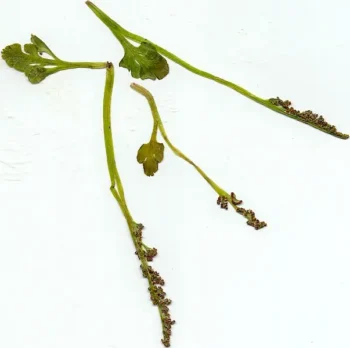
Little grapefern is a perennial fern that breaks all the typical fern rules. Instead of the large, feathery fronds we usually associate with ferns, this diminutive species produces a single, small leaf and a separate fertile stalk topped with what looks remarkably like a cluster of tiny grapes – hence the name! These grapes are actually sporangia, the structures that contain the fern’s spores.
A True North American Native
This little wonder is a proud native species found throughout an impressive range across North America. Little grapefern calls home to Alaska, Canada, Greenland, and much of the lower 48 states, making it one of our continent’s most widely distributed native ferns.
You can find little grapefern growing naturally across an extensive geographic range, including Alberta, British Columbia, Alaska, New Brunswick, California, Nova Scotia, Ontario, Colorado, Prince Edward Island, Connecticut, Quebec, Delaware, Saskatchewan, Northwest Territories, Idaho, Illinois, Indiana, Iowa, Maine, Maryland, Massachusetts, Michigan, Minnesota, Mississippi, Montana, Nevada, New Hampshire, New Jersey, New York, North Carolina, North Dakota, Ohio, Oregon, Pennsylvania, Rhode Island, South Dakota, Utah, Vermont, Virginia, Washington, West Virginia, Wisconsin, Wyoming, and Newfoundland.
- Species observed
- No observations
A Conservation Concern
Here’s where things get interesting – and important. In New Jersey, little grapefern holds special conservation status, being listed as rare with various protective designations including Highlands Listed status. This means that while the species has a broad overall range, local populations can be quite vulnerable.
Where Does Little Grapefern Like to Live?
Little grapefern is quite the habitat generalist, which explains its wide distribution. Its wetland status varies by region:
- In Alaska: Usually found in non-wetland areas but may occur in wetlands
- In the Arid West, Great Plains, Midwest, and several other regions: Can occur in both wetlands and non-wetlands
- In Eastern Mountains, Atlantic Coast, and similar regions: Typically prefers non-wetland habitats
Should You Try Growing Little Grapefern?
Here’s the honest truth: little grapefern is notoriously difficult to cultivate. These ferns have complex ecological relationships, particularly with soil fungi (mycorrhizae), that are nearly impossible to replicate in garden settings. Even experienced botanists struggle to grow them successfully outside their natural habitats.
Given its rarity status in some regions and cultivation challenges, little grapefern is best appreciated in its natural woodland settings rather than attempted in home gardens.
How to Identify Little Grapefern
If you’re lucky enough to spot one in the wild, here’s what to look for:
- Tiny size – usually only 2-6 inches tall
- Single, small triangular leaf (sterile frond)
- Separate fertile stalk with grape-like cluster of sporangia
- Appears in late spring to early summer
- Often found in small groups in woodland clearings
Supporting Little Grapefern Conservation
The best way to help little grapefern thrive is to:
- Protect existing woodland habitats
- Avoid disturbing areas where you find them
- Support local conservation organizations
- Choose other native ferns for your garden that are easier to grow
Native Alternatives for Your Garden
If you’re inspired by little grapefern but want something more garden-friendly, consider these beautiful native ferns instead:
- Christmas fern (Polystichum acrostichoides)
- Lady fern (Athyrium filix-femina)
- Interrupted fern (Osmunda claytoniana)
- Maidenhair fern (Adiantum pedatum)
Little grapefern may be challenging to grow, but it serves as a wonderful reminder of the incredible diversity and delicate beauty of our native plant communities. The next time you’re walking through a woodland area, keep your eyes peeled for this tiny treasure – spotting one is like finding a botanical four-leaf clover!