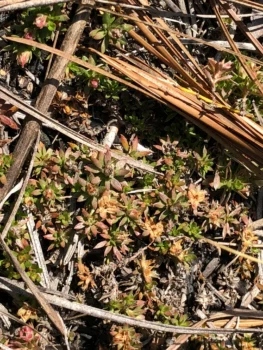
Littleleaf Pixiemoss: A Tiny Treasure for the Southeastern Native Garden
If you’re looking for a ground-hugging native plant that’s as charming as its name suggests, littleleaf pixiemoss (Pyxidanthera brevifolia) might just cast a spell on your garden. This diminutive evergreen shrub brings a touch of woodland magic to specialized native landscapes, though it comes with some important considerations for the conscientious gardener.
What Makes Littleleaf Pixiemoss Special?
Don’t let the name fool you – littleleaf pixiemoss isn’t actually a moss at all! This perennial native is a true flowering shrub, albeit one that stays remarkably close to the ground. Rarely growing taller than 18 inches, and usually staying well under a foot in height, this plant forms dense, carpet-like mats that spread slowly across the landscape.
The real magic happens in spring when tiny white flowers appear among the needle-like evergreen foliage, creating a delicate display that attracts small native pollinators. The leaves themselves are the star of the show year-round – small, densely packed, and staying green through all seasons.
A Plant with a Limited Range
Littleleaf pixiemoss is exclusively native to North Carolina and South Carolina, where it grows in very specific conditions. This narrow geographic distribution tells us something important about this plant: it’s a specialist that has evolved for particular environmental conditions.
- Species observed
- No observations
Conservation Concerns: Handle with Care
Important note for gardeners: Littleleaf pixiemoss has a Global Conservation Status of S3, meaning it’s considered vulnerable in the wild. This classification indicates that the species is at risk due to its limited range and specific habitat requirements. If you’re interested in growing this plant, it’s crucial to source it only from reputable native plant nurseries that propagate their own stock rather than collecting from wild populations.
Is Littleleaf Pixiemoss Right for Your Garden?
This charming ground cover is perfect for gardeners who:
- Live in USDA hardiness zones 7-9
- Want to support native plant conservation
- Have sandy, well-draining, acidic soil conditions
- Appreciate subtle, naturalistic plantings
- Are looking for low-maintenance ground cover once established
However, littleleaf pixiemoss might not be the best choice if you need a fast-growing ground cover, have heavy clay soil, or want something that can handle heavy foot traffic.
Growing Conditions and Care
Success with littleleaf pixiemoss comes down to mimicking its natural habitat:
Soil: The key to success is sandy, acidic, well-draining soil. This plant absolutely cannot tolerate waterlogged conditions and will quickly decline in heavy, clay soils.
Light: Partial shade to full sun works well, though some protection from the hottest afternoon sun can be beneficial in warmer zones.
Water: Once established, littleleaf pixiemoss is quite drought tolerant. In fact, overwatering is more likely to cause problems than underwatering.
Fertilizer: Keep it minimal! This native prefers lean soils and can be harmed by too much fertilizer.
Planting and Establishment Tips
- Plant in spring or early fall for best establishment
- Space plants 12-18 inches apart for eventual coverage
- Mulch lightly with pine needles or leaf mold to retain moisture during establishment
- Be patient – this slow-growing plant may take 2-3 years to become fully established
- Protect from foot traffic, as the delicate stems can be easily damaged
Wildlife and Pollinator Benefits
While small in stature, littleleaf pixiemoss punches above its weight when it comes to supporting native wildlife. The spring flowers provide nectar for tiny native bees and other small pollinators who might be overlooked by larger flowering plants. The dense mat-forming growth also provides shelter for small insects and spiders.
Design Ideas and Garden Companions
Littleleaf pixiemoss works beautifully in:
- Native plant gardens focused on Southeastern flora
- Rock gardens with acidic, sandy soil
- Woodland edges and naturalized areas
- Specialized collections of rare native plants
Consider pairing it with other native ground covers like wintergreen (Gaultheria procumbens) or native azaleas for a layered, naturalistic look.
The Bottom Line
Littleleaf pixiemoss is a plant for the dedicated native plant enthusiast who appreciates subtle beauty and wants to contribute to conservation efforts. While it requires specific growing conditions and patience, the reward is a unique, evergreen ground cover that supports native ecosystems and brings a touch of rare botanical magic to your garden.
Remember, if you decide to grow this vulnerable species, always source plants from reputable nurseries that propagate their own stock. By growing littleleaf pixiemoss responsibly, you’re not just adding beauty to your garden – you’re helping preserve a piece of our native botanical heritage.