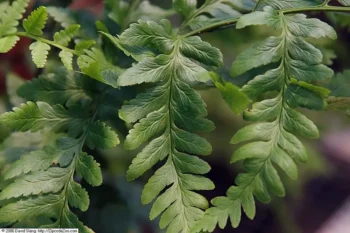
Log Fern: A Rare Native Beauty for Your Shade Garden
Meet the log fern (Dryopteris celsa), one of North America’s most impressive yet underappreciated native ferns. This stately perennial brings bold, architectural beauty to shaded spaces while supporting our native ecosystems. But before you rush to add one to your garden, there’s something important you need to know about this remarkable plant.
A Rare Treasure Worth Protecting
Here’s the thing about log fern – it’s actually quite rare in the wild. This native beauty is listed as endangered in New Jersey and holds concerning conservation status in Alabama (S1) and Arkansas (S2). What does this mean for gardeners? If you’re lucky enough to find log fern for sale, make absolutely sure it comes from a reputable nursery that propagates plants responsibly rather than collecting from wild populations.
Where Log Fern Calls Home
Log fern is native to 21 states across the eastern and southeastern United States, including Alabama, Arkansas, Delaware, Georgia, Illinois, Indiana, Kentucky, Louisiana, Maryland, Michigan, Missouri, New Jersey, New York, North Carolina, Pennsylvania, South Carolina, Tennessee, Texas, Virginia, and West Virginia, plus the District of Columbia.
- Species observed
- No observations
Why Your Garden (and Local Ecosystem) Will Love It
This isn’t your average backyard fern. Log fern can reach an impressive 2-4 feet in both height and width, creating dramatic focal points in shade gardens with its broad, deeply divided fronds. The bold texture and substantial size make it perfect for:
- Woodland gardens that need structural interest
- Native plant gardens celebrating local flora
- Rain gardens and naturalized wetland areas
- Shaded borders where you want year-round presence
While log fern doesn’t offer nectar for pollinators (being a fern and all), it does provide habitat and shelter for various wildlife species, contributing to the complex web of your local ecosystem.
The Wetland Connection
Here’s where log fern gets really interesting – its relationship with water varies dramatically by region. In most areas (Eastern Mountains, Great Plains, Midwest, and Northeast), it’s considered an obligate wetland plant, meaning it almost always grows in wet conditions. However, in the Atlantic and Gulf Coastal Plain, it’s more flexible, able to thrive in both wetland and non-wetland situations.
Growing Log Fern Successfully
Ready to give this native beauty a home? Log fern is surprisingly adaptable once you understand its needs:
Light Requirements: Partial to full shade – think dappled sunlight under trees rather than deep, dark corners
Soil Needs: Consistently moist to wet, rich organic soil that drains well despite staying damp
Climate Tolerance: Hardy in USDA zones 4-9, making it suitable for most temperate gardens
Planting Tips: Spring is your best bet for planting. Dig a hole twice as wide as the root ball, amend with compost, and plant at the same depth it was growing in the container.
Caring for Your Log Fern
The good news? Log fern is fairly low-maintenance once established:
- Keep soil consistently moist – think of a wrung-out sponge
- Apply a 2-3 inch layer of organic mulch around the base
- Skip the fertilizer – rich, organic soil provides all the nutrients needed
- Remove old, brown fronds in late winter before new growth emerges
- Be patient – ferns can take a season or two to really hit their stride
The Bottom Line
Log fern deserves a place in more native gardens, but only when sourced responsibly. Its impressive size, native credentials, and adaptability make it a fantastic choice for the right spot. Just remember to buy from reputable nurseries that propagate rather than wild-collect, and you’ll be supporting both your garden’s beauty and conservation efforts.
If you can’t find responsibly sourced log fern, consider other native ferns like Christmas fern or lady fern that are more readily available and less conservation-sensitive. Your local ecosystem will thank you either way!