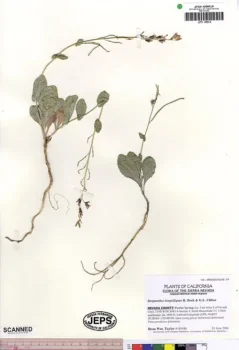
Long-Fruit Jewelflower: A Rare California Native Worth Protecting
Meet the long-fruit jewelflower (Streptanthus longisiliquus), a delicate perennial that’s as intriguing as its name suggests. This native California wildflower might not be the showiest plant in the garden center, but it carries a special significance for those passionate about preserving our native plant heritage.
What Makes This Plant Special
The long-fruit jewelflower belongs to the mustard family and grows as a perennial forb – basically a non-woody plant that comes back year after year. Like other plants in its family, it lacks significant woody tissue and keeps its growing points at or below ground level, helping it survive through tough seasons.
What sets this species apart isn’t just its elegant name, but its story of survival. This little California native has earned a Global Conservation Status of S3, meaning it’s considered vulnerable throughout its range. With typically only 21 to 100 known occurrences and an estimated 3,000 to 10,000 individuals remaining, this plant is fighting to maintain its foothold in the wild.
Where You’ll Find It Growing Wild
The long-fruit jewelflower calls California home exclusively, making it a true Golden State endemic. Its limited distribution contributes to its vulnerable status, as the plant relies on specific California habitats to survive.
- Species observed
- No observations
Should You Plant It in Your Garden?
Here’s where things get interesting – and important. While supporting native plants is always admirable, the long-fruit jewelflower’s vulnerable status means we need to approach it thoughtfully. If you’re considering adding this species to your garden, here are the key points to consider:
- Conservation priority: This plant needs our help, making it a meaningful addition for conservation-minded gardeners
- California native: Perfect for supporting local ecosystems and wildlife
- Perennial nature: Once established, it should return year after year
- Rarity factor: You’ll be helping preserve a vulnerable species
The Responsible Approach
Important: If you decide to grow long-fruit jewelflower, only source it from reputable native plant nurseries that propagate from ethically collected seed or cuttings. Never collect plants or seeds from wild populations – this could further threaten the species’ survival.
Consider contacting local native plant societies, botanic gardens, or conservation organizations in California. They may have seed collection programs or can direct you to responsible sources.
Growing Conditions and Care
Unfortunately, specific growing requirements for Streptanthus longisiliquus are not well-documented in common gardening resources, likely due to its rarity and limited cultivation. If you obtain this plant through responsible sources, the supplier should provide detailed care instructions based on their propagation experience.
Generally, California natives in the Streptanthus genus prefer:
- Well-draining soils
- Mediterranean climate conditions
- Minimal summer water once established
- Full sun to partial shade
Alternative Options
If you can’t source long-fruit jewelflower responsibly, consider other California native plants that are more readily available and can provide similar ecological benefits. Many other native wildflowers and forbs can support local wildlife while being easier to find and grow.
The Bottom Line
The long-fruit jewelflower represents both an opportunity and a responsibility. While it would make a meaningful addition to a native plant garden, its vulnerable status means we must approach it with care and respect. If you can source it ethically, you’ll be participating in conservation efforts while supporting California’s unique plant heritage. Just remember – with rare plants comes the responsibility to help protect them for future generations.