Longbract Frog Orchid: A Rare Native Gem Worth Protecting
Meet the longbract frog orchid (Dactylorhiza viridis), one of North America’s most understated yet fascinating native orchids. Don’t let its humble appearance fool you – this little green beauty is a botanical treasure that tells an incredible story of adaptation and survival across some of our continent’s most challenging environments.
What Makes This Orchid Special?
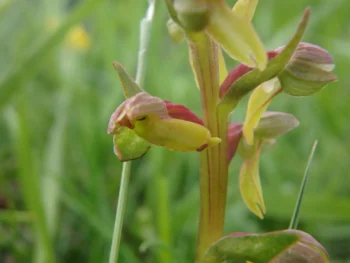
The longbract frog orchid is a perennial forb that belongs to the exclusive club of native North American orchids. Unlike its flashy tropical cousins, this orchid has mastered the art of subtlety. Standing just 6 to 24 inches tall, it produces small, greenish flowers that are often overshadowed by long, leafy bracts – hence the longbract part of its name.
What truly sets this plant apart is its incredible geographic range and hardy nature. This orchid has managed to establish itself across Alaska, throughout Canada, and in much of the northern United States, making it one of our most widely distributed native orchids.
Where You’ll Find This Northern Beauty
The longbract frog orchid has an impressive native range that spans from coast to coast across northern North America. You can find it growing naturally in states and provinces including Alberta, British Columbia, Alaska, Manitoba, Ontario, Quebec, and extending south into states like Colorado, Montana, Michigan, Minnesota, New York, and even as far south as New Mexico and North Carolina in mountainous regions.
- Species observed
- No observations
This extensive distribution speaks to the plant’s remarkable adaptability to different climatic conditions, though it consistently prefers cooler environments typical of northern latitudes and higher elevations.
A Word of Caution: Rarity Matters
Before you start dreaming of adding this orchid to your garden, there’s something important you need to know. The longbract frog orchid is considered rare in several parts of its range. In New Jersey, for example, it holds a rarity status of S2, meaning it’s imperiled and at high risk of extinction within the state.
This rarity status means that if you’re determined to grow this orchid, you must – and we cannot stress this enough – only obtain plants or seeds from responsible, ethical sources that don’t harm wild populations. Never collect from the wild, as this can contribute to local extinctions.
The Challenge of Growing Longbract Frog Orchids
Let’s be honest: growing this orchid is not for the faint of heart or the casual gardener. Native orchids like Dactylorhiza viridis have incredibly specific requirements that make them among the most challenging plants to cultivate successfully.
Here’s what makes them so tricky:
- They require specific soil fungi (mycorrhizae) to survive and thrive
- They need consistently cool, moist conditions
- They’re adapted to very specific soil chemistry and drainage patterns
- They have complex dormancy and growth cycles
- They’re extremely sensitive to changes in their environment
Natural Growing Conditions
In the wild, longbract frog orchids typically inhabit cool, moist environments such as:
- Fens and wet meadows
- Cool, damp woodlands
- Mountain slopes with consistent moisture
- Areas with calcareous (lime-rich) soils
- Regions with cool summers and cold winters (USDA Zones 2-6)
The orchid’s wetland status varies by region, ranging from facultative (equally likely in wet or dry conditions) to facultative wetland (usually found in wet conditions), highlighting its preference for consistent moisture without being waterlogged.
Ecological Benefits
While the longbract frog orchid might not be the showiest pollinator plant, it does play a role in supporting native ecosystems. The flowers attract small flies and other pollinators that are part of the intricate web of northern forest and meadow communities. As a native species, it’s also part of the historical plant communities that have supported wildlife for thousands of years.
Should You Try Growing It?
For most gardeners, we’d recommend admiring this orchid in its natural habitat rather than attempting to grow it. However, if you’re an experienced native plant enthusiast with a passion for orchids and access to responsibly sourced plants, here are some considerations:
- Only attempt cultivation if you can provide consistently cool, moist conditions
- Ensure you have appropriate soil conditions with good drainage but consistent moisture
- Research local mycorrhizal fungi requirements
- Be prepared for a high failure rate even with perfect conditions
- Consider it a long-term project requiring patience and dedication
Better Alternatives for Most Gardens
If you’re drawn to the idea of native orchids but want something more manageable, consider these alternatives:
- Wild ginger for woodland gardens
- Native violets for spring color
- Bloodroot for early spring blooms
- Regional native wildflowers that support pollinators
The Bottom Line
The longbract frog orchid is a remarkable native plant that deserves our respect and protection. While it’s probably not the right choice for most home gardens due to its rarity and specialized needs, it represents the incredible diversity and adaptation of North America’s native flora. If you encounter one in the wild, take a moment to appreciate this subtle survivor that has been quietly thriving in our northern landscapes for millennia.
Remember, sometimes the best way to love a plant is to let it remain wild and focus our gardening efforts on more suitable native species that can thrive in cultivation while still supporting our local ecosystems.