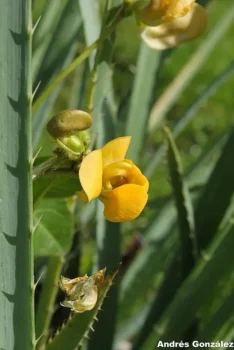
Longleaf Cowpea: A Hidden Gem for Wetland Gardens
If you’re looking to add authentic Caribbean flair to your wetland garden, let me introduce you to a lesser-known native treasure: the longleaf cowpea (Vigna longifolia). This charming herbaceous perennial might not be the flashiest plant in your garden center, but it’s a true specialist that deserves a spot in the right setting.
What Is Longleaf Cowpea?
Longleaf cowpea is a native Puerto Rican perennial herb that belongs to the legume family. You might also see it listed under its former scientific names, Phaseolus schottii or Phaseolus trichocarpus, if you’re digging through older botanical references. As its common name suggests, this plant produces distinctively long, narrow leaflets that give it an elegant, feathery appearance.
Unlike its woody cousins, longleaf cowpea is what botanists call a forb – essentially a soft-stemmed plant that dies back to ground level but returns year after year from its root system. Think of it as the herbaceous cousin of those climbing beans in your vegetable garden, but with a much more refined garden presence.
Where Does It Grow Naturally?
This plant is a true Puerto Rican native, naturally occurring throughout the island’s wetland areas. Its distribution is quite limited geographically, making it a special addition for gardeners interested in authentic Caribbean flora.
- Species observed
- No observations
Why Consider Growing Longleaf Cowpea?
Here’s where things get interesting – longleaf cowpea is what we call an obligate wetland plant. This means it almost exclusively grows in consistently moist to wet conditions. While this might sound limiting, it actually makes this plant incredibly valuable for specific garden situations:
- Wetland restoration: Perfect for rain gardens, bog areas, or pond edges
- Erosion control: Its root system helps stabilize wet soils
- Native authenticity: Brings genuine Caribbean ecosystem plants to your landscape
- Pollinator support: The small purple flowers attract native bees and butterflies
- Low maintenance: Once established in proper conditions, it largely takes care of itself
Growing Conditions and Care
Let’s be honest – longleaf cowpea isn’t for everyone. This plant has very specific needs that you’ll need to meet for success:
Climate Requirements: This is strictly a tropical plant, suited only for USDA hardiness zones 10-11. If you experience any frost, this plant won’t survive outdoors year-round.
Water Needs: Here’s the big one – longleaf cowpea absolutely requires consistently moist to wet soil. We’re talking wetland conditions, not just regular watering. If you don’t have a naturally wet area or water feature, you’ll need to create one.
Light Conditions: Full sun to partial shade works well, though it tends to flower more prolifically with good sun exposure.
Soil Preferences: Wet, organic-rich soils are essential. Sandy loams that stay consistently saturated work well.
Planting and Propagation Tips
Growing longleaf cowpea from seed can be tricky, as legume seeds often have hard seed coats. Try scarifying the seeds (lightly scratching or nicking the surface) before planting to improve germination rates. Plant in consistently moist potting mix and keep warm – think 75-80°F for best results.
If you can find established plants, transplanting is generally more reliable than starting from seed. Plant during the warm season when growth is most active.
Garden Design Ideas
Longleaf cowpea works beautifully in several specialized garden settings:
- Rain gardens: Plant along the edges where water naturally collects
- Pond margins: Creates a natural transition from water to dry land
- Native plant collections: Essential for authentic Caribbean flora displays
- Wetland restoration projects: Helps recreate natural ecosystem functions
Is This Plant Right for You?
Longleaf cowpea is definitely a specialist plant. Consider it if you:
- Live in zones 10-11 (South Florida, Hawaii, or similar tropical areas)
- Have naturally wet areas in your landscape or want to create them
- Are passionate about native plants and authentic ecosystems
- Enjoy growing unusual or uncommon species
- Want to support native pollinators with specialized plants
However, skip this one if you’re looking for a low-water plant, live in a temperate climate, or want something with showy flowers for general garden display.
The Bottom Line
Longleaf cowpea might not be the easiest plant to grow, but for the right gardener in the right location, it’s a wonderful way to connect with authentic Caribbean ecosystems. Its specialized habitat requirements make it perfect for wetland gardens and restoration projects, while its native status means you’re supporting local biodiversity.
If you have the right conditions and appreciate the subtle beauty of native wetland plants, longleaf cowpea could be exactly the unique addition your garden has been waiting for. Just remember – this is one plant where location, location, location really matters!