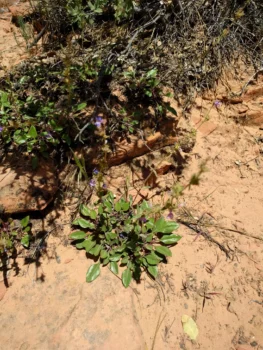
Low Beardtongue: A Rare Utah Native Worth Protecting
If you’re a native plant enthusiast looking to add something truly special to your Utah garden, you might have come across the low beardtongue (Penstemon humilis obtusifolius). But before you rush to plant this native beauty, there’s something important you should know about its conservation status.
What is Low Beardtongue?
Low beardtongue is a perennial forb herb that belongs to the beloved Penstemon genus. Unlike woody shrubs or trees, this plant lacks significant woody tissue and maintains its growing points at or below ground level, helping it survive harsh winters and return each spring. You might also see it listed under its synonym, Penstemon humilis Nutt. ex A. Gray var. obtusifolius (Pennell) Reveal, in older botanical references.
Where Does It Call Home?
This native wildflower has a remarkably limited range—it’s found only in Utah within the lower 48 states. This restricted distribution is part of what makes low beardtongue so special, but also why it requires our careful attention as gardeners.
- Species observed
- No observations
The Rarity Factor: Why This Matters
Here’s where things get important: low beardtongue has a Global Conservation Status of S5T2T3, indicating conservation concern. While not critically endangered, this status suggests the plant deserves careful consideration before cultivation. This rarity status is likely related to its limited geographic range and specific habitat requirements.
Should You Plant Low Beardtongue?
As a responsible native plant gardener, you can consider growing low beardtongue, but with important caveats:
- Only source plants from reputable native plant nurseries that propagate rather than wild-collect
- Never collect seeds or plants from wild populations
- Ensure you’re in Utah where this plant naturally occurs
- Consider supporting conservation efforts for this species
The Information Gap
Unfortunately, detailed growing information for this specific variety is limited in horticultural literature. Unlike its more common Penstemon cousins, low beardtongue hasn’t been extensively studied or cultivated, which is typical for rare native plants.
If you’re drawn to the Penstemon genus for your Utah garden, consider these more common and well-documented alternatives:
- Firecracker Penstemon (Penstemon eatonii)
- Rocky Mountain Penstemon (Penstemon strictus)
- Palmer’s Penstemon (Penstemon palmeri)
Supporting Conservation
Whether or not you choose to grow low beardtongue, you can support its conservation by:
- Learning about Utah’s native plant communities
- Supporting organizations that protect native plant habitats
- Choosing other native Utah plants for your landscape
- Sharing knowledge about rare native species with fellow gardeners
Low beardtongue represents the fascinating diversity of native plants that evolved in specific places over thousands of years. While we may not have all the growing details figured out yet, respecting its rarity and limited range is the first step in being a responsible steward of our native plant heritage.