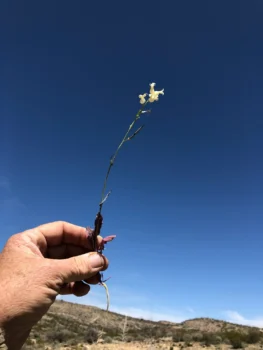
Lyreleaf Jewelflower: A Hidden Gem for Southwest Native Gardens
If you’re looking to add authentic southwestern charm to your native garden, the lyreleaf jewelflower (Streptanthus carinatus arizonicus) might just be the understated beauty you’ve been searching for. This delicate annual wildflower brings subtle elegance and important ecological value to desert landscapes and naturalized garden areas.
Meet the Lyreleaf Jewelflower
The lyreleaf jewelflower is a native forb—essentially a non-woody flowering plant—that calls the American Southwest home. As an annual to biennial plant, it completes its life cycle in one to two growing seasons, making it a charming but temporary visitor to your garden beds.
You might also encounter this plant listed under its synonyms Streptanthus arizonicus or Streptanthus arizonicus var. luteus in older botanical references, but they’re all referring to the same lovely southwestern native.
Where Does It Call Home?
This native beauty has made itself at home across Arizona, New Mexico, and Texas, thriving in the unique conditions of the southwestern United States. It’s perfectly adapted to the desert and semi-desert environments that characterize this region.
- Species observed
- No observations
Why Consider Lyreleaf Jewelflower for Your Garden?
While it may not be the showiest plant in your garden, the lyreleaf jewelflower offers several compelling reasons to include it in your native landscaping:
- Supports local ecosystems by providing food for native pollinators like small bees and flies
- Requires minimal water once established, making it perfect for water-wise gardening
- Adds authentic regional character to southwestern native plant gardens
- Self-seeds readily, creating natural colonies in suitable spots
- Low maintenance once established in appropriate conditions
A Note About Conservation
Before you rush to plant this charming native, it’s important to know that lyreleaf jewelflower has a conservation status that requires some consideration. Always source seeds or plants from reputable native plant nurseries that use responsibly collected materials. Never collect from wild populations, and consider this an opportunity to support conservation-minded growers.
Garden Design and Landscape Role
The lyreleaf jewelflower shines in naturalized settings where its subtle beauty can be appreciated up close. Consider incorporating it into:
- Desert and xeriscape gardens
- Native wildflower meadows
- Pollinator gardens focused on southwestern species
- Rock gardens with well-draining conditions
- Naturalized areas where self-seeding is welcome
Growing Conditions and Care
Like most desert natives, lyreleaf jewelflower prefers conditions that mimic its natural habitat:
- Sunlight: Full sun to partial shade
- Soil: Well-draining soils; tolerates poor, rocky, or sandy conditions
- Water: Drought tolerant once established; minimal supplemental watering needed
- Climate: Best suited for USDA hardiness zones 8-10
Planting and Propagation Tips
The best approach for growing lyreleaf jewelflower is direct seeding in fall:
- Scatter seeds in prepared soil during fall months
- Lightly rake to ensure good seed-to-soil contact
- Water gently until germination occurs
- Allow plants to self-seed for natural colonies
- Avoid over-fertilizing, as this can reduce flowering
The Bottom Line
While lyreleaf jewelflower may not command attention like showier desert blooms, it offers quiet beauty and important ecological value for the right garden setting. If you’re passionate about authentic southwestern native gardening and can source plants responsibly, this little gem deserves a place in your landscape. Its low-maintenance nature and ability to support local pollinators make it a worthwhile addition to any water-wise, ecologically-minded garden design.
Remember, the most rewarding native gardens are those that celebrate the subtle beauty of regional flora while supporting local ecosystems—and the lyreleaf jewelflower does both beautifully.